How to Become a UGC Creator: Step-by-Step Roadmap (2026)
No experience needed. Learn how to become a UGC creator in 2026 – pick a niche, build a 3-sample portfolio, set your rates, and land your first paid brand deal.

Founder & CEO, Superdeal

UGC (user-generated content) creation is a paid content job — brands hire everyday people to film short, authentic videos and photos that they use in their own ads and social feeds. You don't need a following, a fancy camera, or prior experience: UGC creators get hired for authenticity and deliverability, not audience size. The path from zero to first paid gig follows five steps: pick a niche, grab your phone, build a three-sample portfolio, set your rates, and get listed where brands are already searching. Below is the full 2026 roadmap. For a deeper look at what the role actually means, see our UGC creator guide.
UGC vs. Influencer — What's Actually Different
Most people searching "how to become a UGC creator" already have an Instagram account and assume they need to grow a following first. They don't. UGC and influencer marketing are two different jobs.
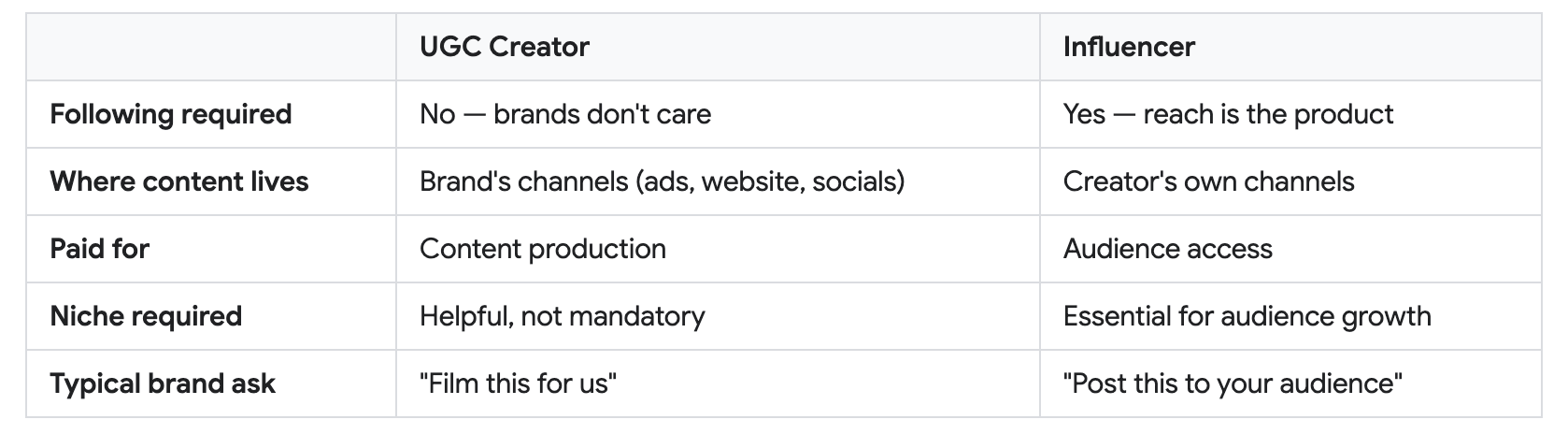
As a UGC creator, you're a content producer. The brand buys your footage and puts it in their paid ads, their website, their email campaigns. They are not buying access to your followers. That's the whole unlock: you can start earning paid work on Day 1 with zero following, because the deliverable is the video itself.
What Does a UGC Creator Actually Do?
Day to day, a UGC creator receives a brief from a brand — usually a product to feature, a hook to lead with, and a target audience to speak to. You film the video (or shoot the photos), do a basic edit, and deliver the files. The brand handles posting, boosting, and distribution.
Common deliverables include unboxing videos, first-person product reviews, tutorials, lifestyle b-roll (product shown in your daily context), and short testimonial clips. Most brands want 15–60 second vertical video for TikTok and Instagram Reels.
Types of UGC brands buy most in 2026
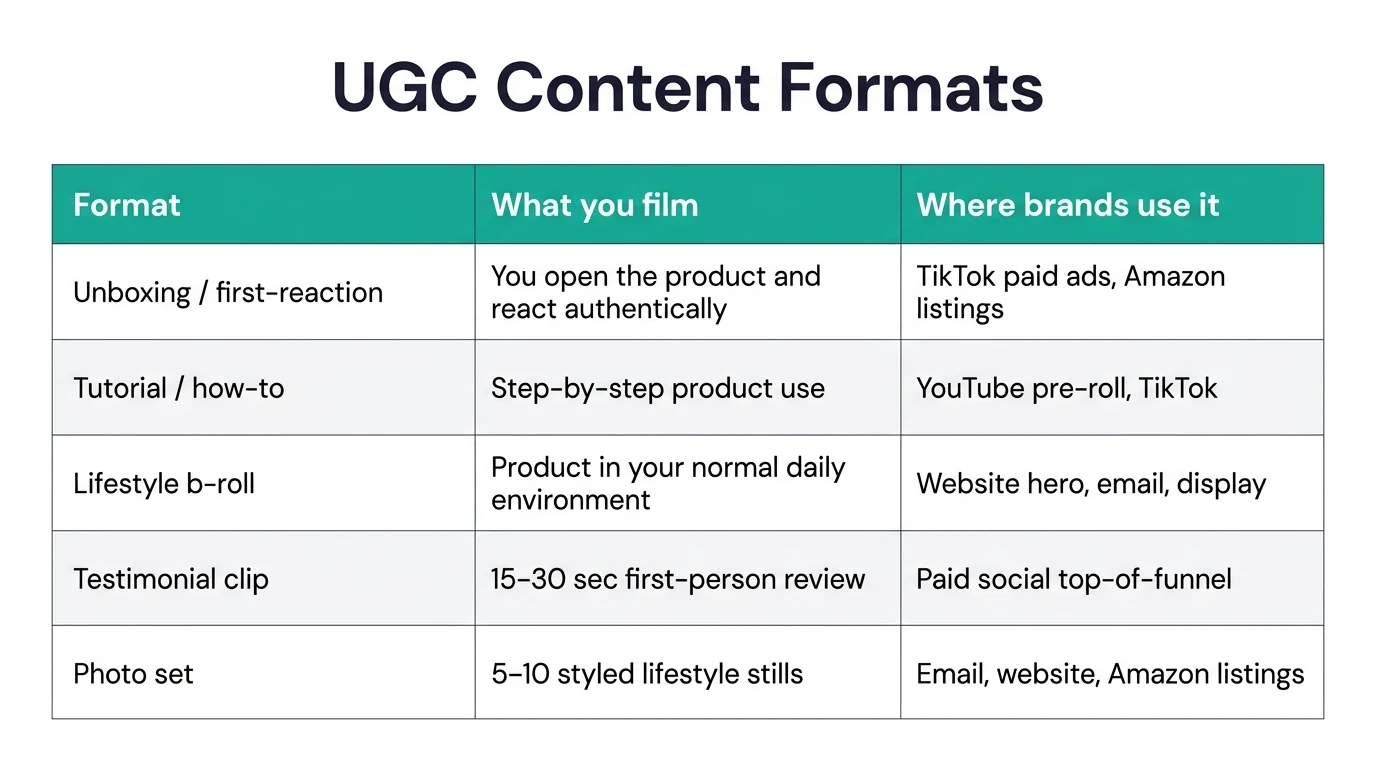
See our UGC videos guide for format examples and what performs best in paid ads.
Step 1 — Pick a Niche (and Why It Affects Your Rates)
Niche selection is not about limiting yourself — it's about being credible. A brand selling a protein supplement wants a creator who visibly lives a fitness lifestyle, not a generic "lifestyle creator." Credibility within a category leads to repeat work and faster rate increases.
Choose a niche where you are a genuine user of the product category: beauty and skincare, fitness and wellness, home and kitchen, food and cooking, pet care, parenting, tech and gadgets, or personal finance tools. Pick the one where you already have five products under your bathroom sink or kitchen counter that you'd naturally recommend.
Niche focus also anchors your portfolio. A beauty-focused portfolio of three samples is more likely to get a beauty brand's attention than three disconnected videos covering beauty, tech, and food.
Step 2 — Get Your Gear (Spoiler: It's Just Your Phone)
The gear bar is lower than almost any other paid content job. Here's what actually matters:
Minimum viable setup (first gig):
Modern smartphone (iPhone 12 or equivalent Android) — shoot in native resolution, no external app needed
Window light — find the biggest window in your home, face it, and film in the morning or afternoon
Small tripod ($15–$30) — removes camera shake; one of the highest-ROI purchases you'll make
Optional upgrades (mid-tier packages):
Wireless lavalier mic ($30–$60) — noticeably improves audio on tutorials and reviews
Ring light or LED panel ($40–$80) — useful in low-light spaces, but window light is still better when available
CapCut or DaVinci Resolve (free) — for editing; most brands accept self-edited cuts
Across thousands of deals facilitated on Superdeal, the most common reason a first-time creator doesn't land a paid gig isn't gear quality — it's the absence of any portfolio at all. No brand will ask about your camera specs if your existing footage is clean and well-lit.
Step 3 — Build a Portfolio of 3 Spec Samples
A spec sample is a video you produce as if a brand hired you — using a real product you own, with a hook, a demonstration, and a call-to-action — without any actual brand deal behind it. You're building proof of competence before you have a client.
What a spec sample is and how to make one
Pick three products in your niche that you already own and genuinely like. Film each one as if a brand briefed you. Use a hook in the first two seconds ("I've been using this every morning for 30 days and..."), show the product clearly, and close with a natural recommendation. Keep it 30–45 seconds. Edit for pacing: trim dead air, add captions (85% of mobile video is watched without sound).
You do not need permission from the brand to make a spec sample for portfolio use. You are not claiming a paid partnership; you're demonstrating your filming and editing style.
What to include in your UGC creator portfolio
Your UGC creator portfolio should contain: three spec videos (or real brand deliverables if you have them), a short creator bio (name, niche, location, deliverable types you offer), your contact email or booking link, and your rate sheet or a "rates on request" note.
Simplest format: a Google Drive folder with a PDF one-pager and three video files. A Linktree or Beacons page with embedded videos works just as well. Fancy website optional.
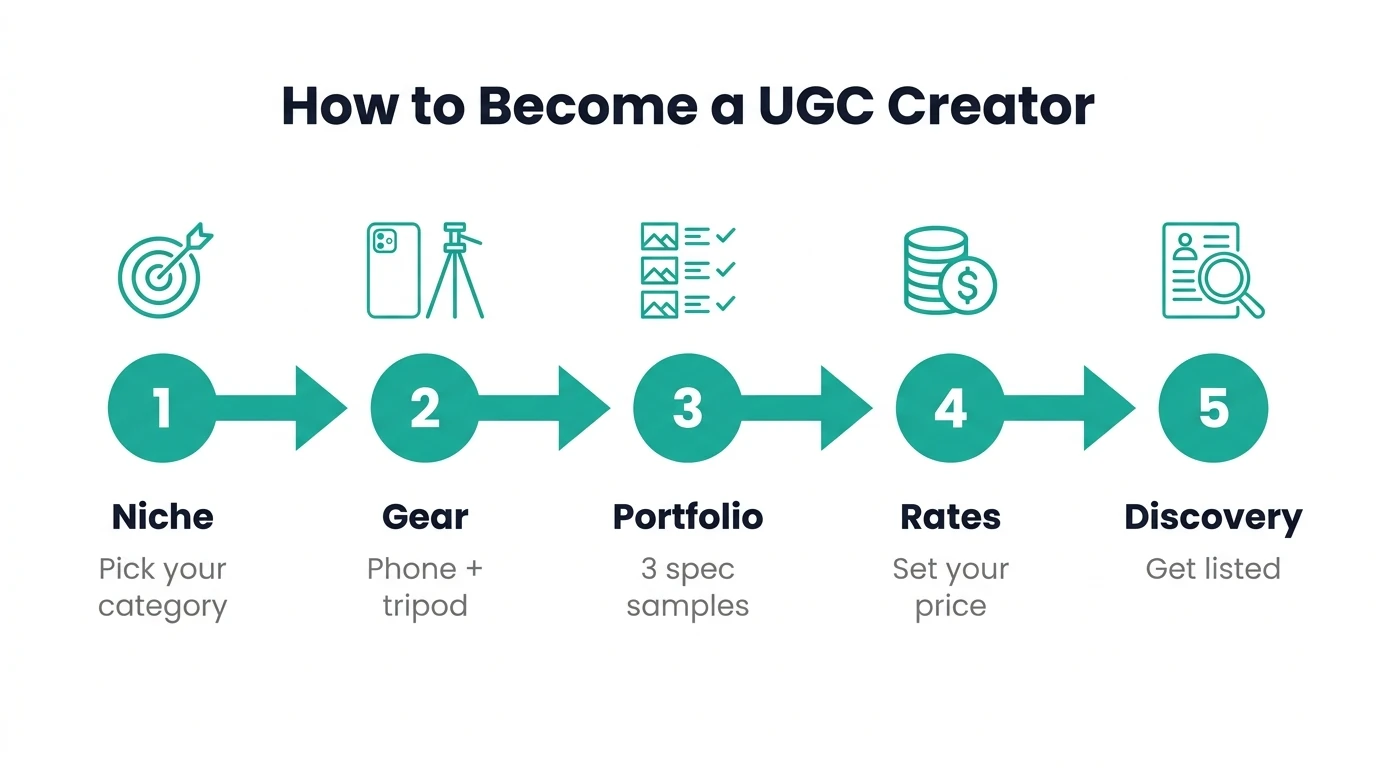
Step 4 — Set Your Rates
UGC rates depend on deliverable type, your experience level, usage rights (where and for how long the brand can run your content), and turnaround time. The table below shows US market estimates for mid-2026.
These are ranges and estimates based on publicly available creator rate data. Actual rates vary significantly by niche, brand budget, and negotiation. See our influencer rate card for a full breakdown.
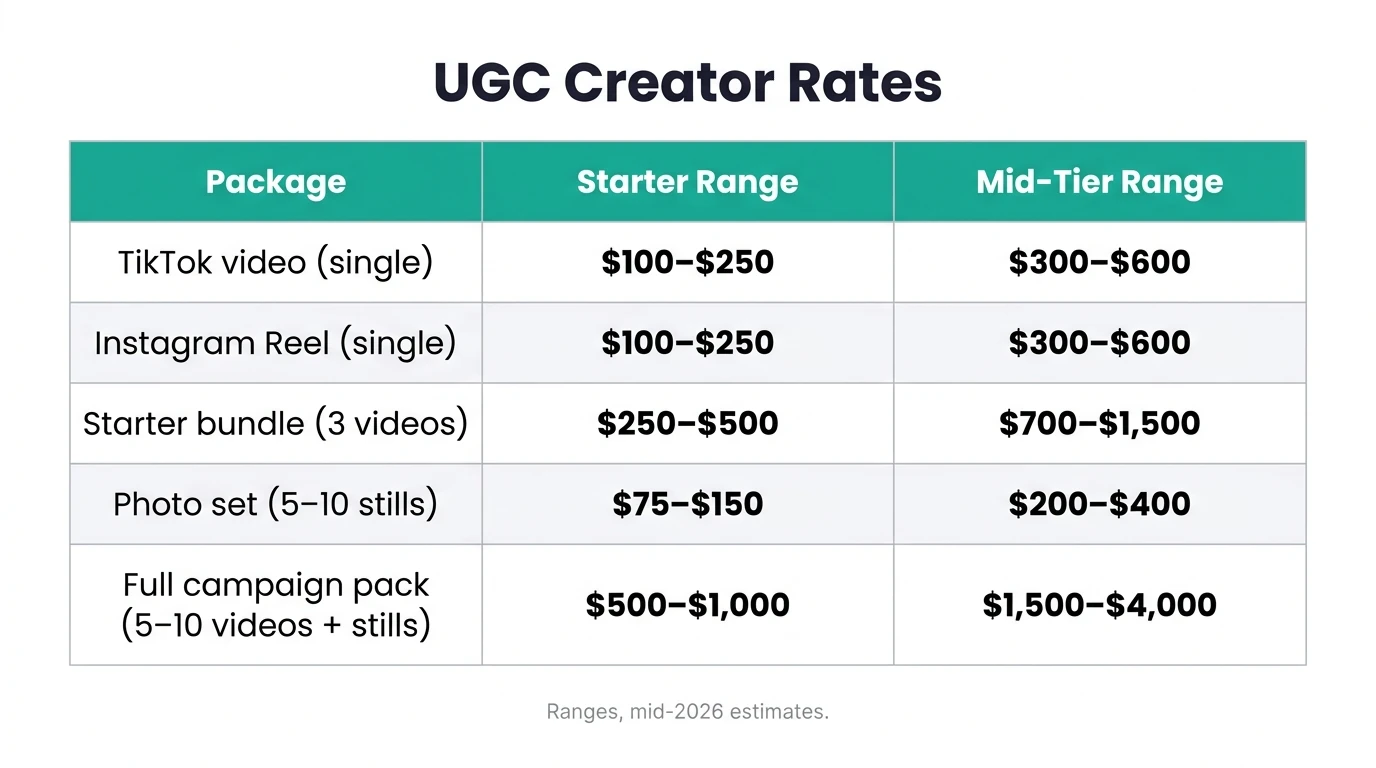
How experience and usage rights change your rate
If a brand wants to run your video as a paid ad (boosted TikTok, paid Instagram), that's a usage rights add-on worth 30–50% of the base rate. A $200 organic-use video becomes $260–$300 with 30-day paid social usage rights, and $350–$400 with 90-day usage. Usage rights are the biggest single lever on UGC rate growth.
At the starter tier ($100–$250/video), focus on building a track record and getting real brand names on your portfolio. Rate increases come faster once you have three paid brand deliverables to point to.
Step 5 — Get Discovered by Brands
With a portfolio and a rate sheet, you have three paths to landing your first deal.
Cold outreach to brands. Find DTC brands in your niche on Instagram or TikTok, DM or email with a brief intro and a link to your portfolio. Conversion rate is low (2–5%), volume is the game. This takes the most time per deal.
Apply to brand campaigns. Some brands post creator briefs publicly on their social channels or websites. Apply directly. Low competition, but inconsistent availability.
List yourself on a UGC marketplace. The fastest path for most first-time creators. Marketplaces like Superdeal let brands search a directory of creators and send deal proposals to you. You're not cold-pitching — you're getting inbound interest from brands who are already in buying mode.
Listing yourself on a UGC marketplace (the fastest path)
Getting listed on Superdeal is free. Once your profile is live, brands can find you by niche, platform, content style, and location. When a brand sends you a deal, the contract terms are built in and payment is held and released automatically when you deliver — so you don't need to chase invoices or worry about getting paid.
For a full breakdown of where brands are searching for UGC creators right now — including platforms and directories — see our brands looking for UGC creators guide.
Get listed free → superdeal.io/get-started
How Much Do UGC Creators Make?
Income ranges widely depending on volume, niche, and rate tier. Here's an honest picture:
Part-time (3–5 deliverables/month, starter rates): $300–$1,250/month. Common for creators building their first portfolio.
Active part-time (8–12 deliverables/month, mid-tier rates): $1,500–$5,000/month. Achievable within 6–12 months of consistent work.
Full-time (20+ deliverables/month, or high-value usage rights): $5,000–$15,000+/month. Requires niche authority, strong portfolio, and repeat brand clients.
UGC income scales with two levers: deliverable volume and usage rights premiums. The fastest income growth comes from turning one-time brand deals into ongoing retainers — a brand that ran your video as an ad for 90 days and got results will want a new batch.
For current benchmarks by platform and format, see the influencer rate card.
How Long Does It Take to Get Your First Paid Gig?
Realistically, 4–8 weeks from the day you complete your portfolio and start applying or listing yourself. The variables:
Portfolio quality — three clean, niche-relevant spec samples cut the feedback cycle dramatically versus a generic demo reel
Niche demand — beauty, wellness, home, and food have the highest brand volume in 2026; highly specialized niches (B2B software, industrial) have longer cycles
Discovery method — marketplace listing is faster than cold outreach because you're being found by buyers, not interrupting them
Application volume — consistent outreach (10–20 pitches per week) shortens timelines; waiting for responses without following up extends them
The most common reason first-time UGC creators wait longer than 8 weeks: they built a portfolio but didn't list it anywhere discoverable, or they built it but never sent it out.
A Note on Contracts and Getting Paid
Any paid UGC engagement should have a written agreement covering at minimum: what you're delivering (format, length, count), when you're delivering it, how much you're being paid and when, and where the brand can use the content. Usage rights — the channels, the duration, and whether paid advertising is included — are the most important clause to get right.
For a free starting-point contract, see our influencer contract template. The FTC Endorsement Guides also apply if a deal includes any posting requirement on your own channels.
Frequently Asked Questions
1. Can you become a UGC creator with no experience?
Yes. Brands hire UGC creators for authentic delivery and reliability, not a professional portfolio history. Your first three samples can be spec work — self-directed videos you make for real products you own, filmed and edited as if for a brand campaign. No paid deal is required to build a starting portfolio.
2. How do I start UGC with no following?
A following is irrelevant for UGC work. Brands aren't buying your audience — they're buying your content. Build three spec samples in your chosen niche, host them in a Google Drive folder or on a simple Beacons page, and start applying to brands or list yourself on a UGC marketplace so inbound deals come to you.
3. What equipment do UGC creators need?
A modern smartphone (iPhone 12 or equivalent Android), window light, and a $15–$30 tripod cover the majority of what brands ask for. A wireless mic ($30–$60) and a ring light ($40–$80) are useful for higher-tier packages but are not required to land your first gig.
4. How long does it take to get your first UGC deal?
Most first-time creators land their first paid deal within 4–8 weeks of completing their portfolio and applying consistently. Listing yourself on a marketplace typically shortens this window because brands are in active buying mode when they search a directory.
5. How much do UGC creators make per video?
Starter range is $100–$250 per short-form video; mid-tier creators with a track record charge $300–$600 or more. Bundles of three or more videos are the most common first-brand format. Usage rights (paid social, paid ads) add 30–50% on top of the base rate. See the influencer rate card for a full breakdown.
6. What niche should I choose as a UGC creator?
Pick a product category where you're a genuine user: beauty, fitness, home, food and drink, tech, pet care, or parenting. Authenticity within a known category leads to higher rates and repeat work from the same brands. A credible niche portfolio is more valuable to a brand than a broad, multi-category one.
7. Do I need a contract for UGC work?
Yes, for any paid engagement. At minimum: deliverables defined, payment terms, usage rights, and a deadline. See our influencer contract template for a free starting point. If you work through Superdeal, the contract terms are built into every deal automatically.
8. What's the difference between UGC and influencer marketing?
In UGC, you're paid to produce content that lives on the brand's channels. In influencer marketing, you're paid to post to your own audience. UGC requires no following; influencer marketing does. Both can be done by the same person, and some deals include both — but the rate structures, deliverables, and brand expectations are different.
Get your first paid UGC deal → List your profile free on Superdeal