Brand Deals: What They Are, How They Work and What They Pay (2026)
What a brand deal is, the 6 types creators get, what brands pay by follower size, how a deal works from pitch to payment, and how to land your first one.

Founder & CEO, Superdeal
Updated October 10, 2026.
TL;DR. A brand deal is an agreement where a company pays a creator, in money, free product or commission, to make or share content about its product. Brands pay for trust with a specific audience, not for follower count, which is why creators with a few thousand followers get brand deals too.
There are six types: sponsored posts, gifting (PR packages), affiliate deals, UGC deals, ambassador programs and product collaborations.
Pay runs from free product to $10,000+ per post. Nano creators (1,000 to 10,000 followers) usually get $50 to $500 per post.
Every deal needs a written agreement and a clear #ad disclosure, even when you are only paid in product.
👉 See which brands are looking for creators like you. Connect your Instagram and get the deals you qualify for. Free, no signup.
A brand deal (also called a brand partnership, sponsorship or brand collab) is when a company gives a creator something of value in exchange for content about its product. The creator might post on their own account, or make a video the brand runs on its own page and in ads. If a brand gives you money, product or a commission and you make content about it, that is a brand deal, and it has to be disclosed.
What Is a Brand Deal?
Every brand deal, big or small, comes down to four things:
What you make. For example, one Instagram Reel and three Stories, or two TikTok videos.
What you get. A fee, free product, a commission on sales, or a mix.
Where it runs. Your account, the brand's account, or the brand's paid ads.
The rules. Deadlines, how many rounds of edits, how long the brand can use the content, and how you disclose it.
Brands do this because people trust a creator they chose to follow more than they trust an ad. A short video from someone who actually uses the product often sells better than a polished commercial, and it costs the brand a fraction of the price.
Why Brands Pay Creators (It's Not Just Followers)
A brand is buying access to the right people and content it can use. Follower count is only one signal, and often not the most important one.
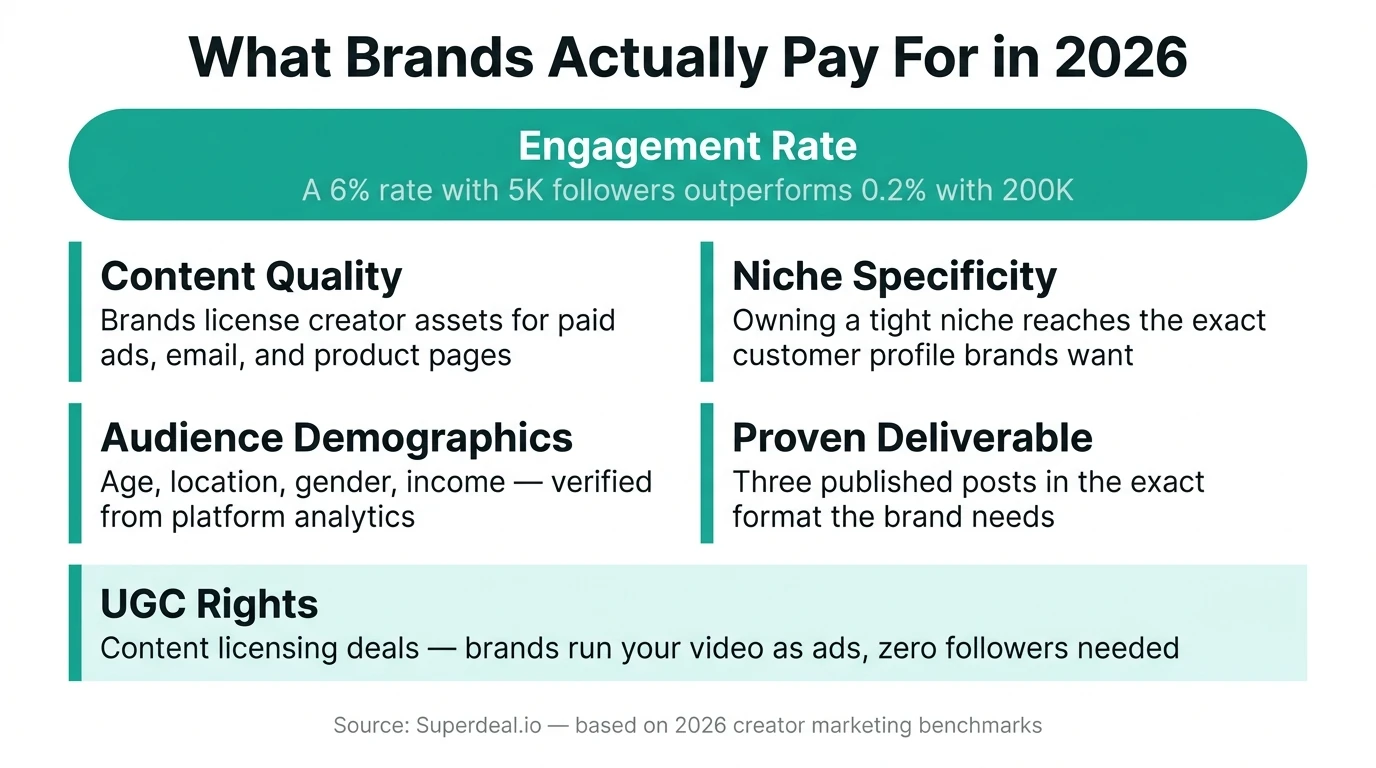
Engagement. A creator with 5,000 followers and 6% engagement can move more product than one with 200,000 followers and 0.2%.
Niche. A creator who posts about vegan baking every week reaches exactly the people a vegan baking brand wants.
Audience match. Age, location and interests that match the brand's customers, shown in your platform analytics.
Content quality. Clean light, clear sound, a strong first three seconds. Brands often reuse good videos as ads.
Reliability. Creators who hit deadlines and answer emails get booked again.
6 Types of Brand Deals
Most creators start with the first two or with UGC, and add the others as their audience grows.
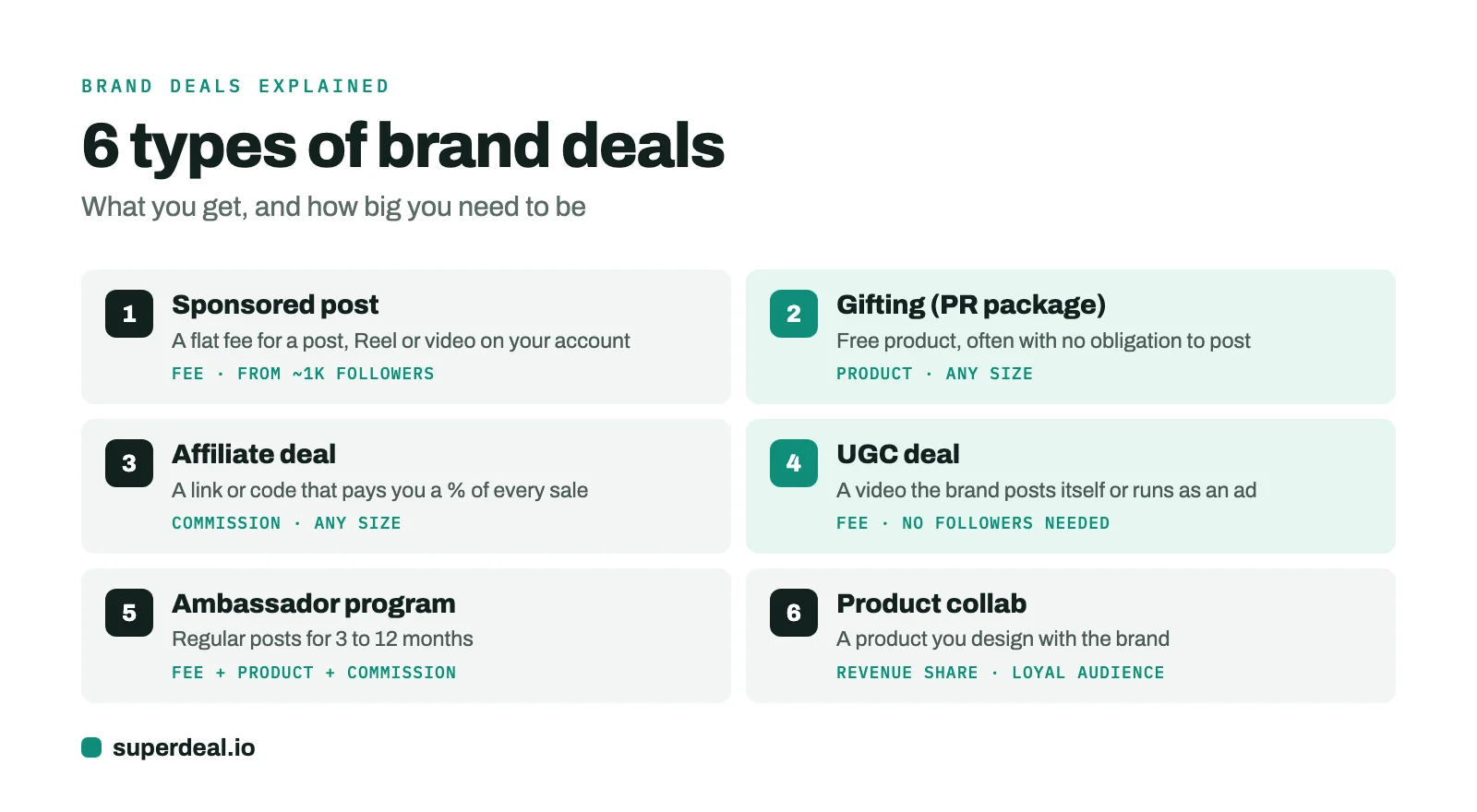
1. Sponsored post
The classic deal: a flat fee for a post, Reel, TikTok or YouTube integration on your account. The brand usually reviews the draft before it goes live. This is what most people mean by "brand deal."
2. Gifting (PR packages)
The brand sends free product and hopes you post. There is often no obligation and no fee. For most small creators this is the first step. Read what is a PR package for what brands expect back, and how to get PR packages to get on brand lists.
3. Affiliate deal
You get a link or discount code and earn a percentage of every sale. No sales, no pay, so these work best when your audience already asks where you buy things. Check the terms with our affiliate agreement template.
4. UGC deal
The brand pays you to make a video it posts on its own account or runs as an ad. It does not go on your feed, so you do not need followers at all. See what a UGC creator is and what the work pays.
5. Ambassador program
A longer partnership, usually three to twelve months. You post about the brand regularly, often for a monthly fee plus product and a commission. Brands offer these to creators who did well on a one-off deal.
6. Product collaboration
You design a product or a collection with the brand and share the revenue. These go to creators with a loyal audience and a clear style, usually after several earlier deals.
How Much Do Brand Deals Pay?
It depends on the platform, the format, your engagement and how the brand can use the content. Typical ranges for one Instagram Reel or TikTok video:
Nano (1K to 10K followers): $50 to $500 per post
Micro (10K to 100K): $300 to $3,500
Mid-tier (100K to 500K): $2,000 to $15,000
Macro (500K+): $10,000 to $75,000+
UGC video, no posting (any size): $75 to $250 to start
Two add-ons move the number most:
Usage rights. If the brand wants to run your video as an ad, charge 30% to 50% more.
Exclusivity. If you can't work with competitors for a few months, charge 25% to 75% more.
These are market ranges, not a price list. Our influencer rate card breaks them down by platform and format. Many first deals are product only. That is fine for one or two deals; after that, ask for a fee.
How a Brand Deal Works, Step by Step
First contact. The brand reaches out, or you pitch them.
Brief. The brand explains what it wants: product, key message, format, dates.
Offer. You agree on the fee, the deliverables and how the brand can use the content.
Contract. Both sides sign before you film. Our influencer contract template shows what it should cover.
Product and filming. The brand ships the product, you make the content.
Approval. The brand reviews your draft. One or two rounds of edits is normal.
Posting. You post on the agreed date with the disclosure at the start of the caption.
Payment. Often 30 days after posting. On a first deal with a new brand, ask for half up front.
Report. Send the stats a week later: views, reach, clicks, code uses. This is what gets you booked again.
If you juggle several deals at once, here is how creators manage brand deals without missing deadlines or payments.
How to Get Your First Brand Deal
Pick a niche and post on a routine. Brands look for creators whose feed is about one thing. Start with how to become an influencer if you are at zero.
Make it easy to hire you. Put "collabs: your@email.com" in your bio and keep a one-page media kit ready.
Start with gifting and UGC. They need the smallest audience and give you your first brand names to show.
Pitch brands you already use. Keep it short: who you are, who follows you, one content idea, one link. Our influencer proposal template gives you the structure.
Be where brands search. A free creator profile on Superdeal puts you in front of brands looking by niche.
If you have under 10,000 followers, read what a nano influencer is. It covers how brands pick small creators and what they pay them.
Brand Deal Red Flags
The brand asks you to pay. For a "starter kit," "ambassador fee" or shipping. Real brands don't charge creators.
No contract. Or a vague one that gives the brand your content "forever, in all media" for no extra money.
Pay depends on results you can't control. "We'll pay if the campaign hits its sales target."
They ask you to hide the ad. No disclosure puts you at risk, not just the brand.
Too-good DMs from new accounts. Check the brand's real website and email domain before you send anything.
Brand Deals and the Law
Disclose every brand deal, including free product. Put "#ad" or the platform's paid partnership label where people see it without tapping "more." The FTC explains the rules in Disclosures 101 for Social Media Influencers.
In the US, cash from brand deals counts as income, and so can the value of product you get in exchange for content. Keep a simple record of every deal. Our PR package guide covers the tax side of gifted product.
👉 Create your free creator profile on Superdeal. Brands search by niche and send offers, contracts are generated for you, and payment is held until you deliver.
Brand Deals FAQ
What is a brand deal?
A paid partnership where a company gives a creator money, free product or a commission in exchange for content about its product. The content may run on the creator's account, the brand's account or in the brand's ads.
How much do brand deals pay?
Nano creators (1,000 to 10,000 followers) usually get $50 to $500 per post, micro creators $300 to $3,500, and larger creators much more. UGC videos start around $75 to $250. Usage rights and exclusivity add to the price.
How many followers do you need to get brand deals?
None for UGC deals, because the brand posts the video itself. For sponsored posts, many brands start working with creators from about 1,000 followers if the niche and engagement fit.
Is a brand deal the same as a sponsorship?
Mostly, yes. "Sponsorship" usually means a brand pays to be featured in your content, which is one type of brand deal. "Brand deal" also covers gifting, affiliate, UGC and ambassador work.
How do small creators get brand deals?
They pick a narrow niche, start with gifting and UGC, pitch brands they already use with one clear idea, and list themselves where brands search for creators. Engagement and niche fit matter more than follower count.
Do I have to pay taxes on brand deals?
In the US, yes. Payments from brands are income, and product received in exchange for content can be too. Keep records of every deal and talk to a tax professional if you are unsure.