How to Become an Amazon Product Tester (Amazon Vine and Other Ways)
Amazon Vine is invitation-only, and outside it Amazon bans reviews for free products. How Vine works, other real ways to test products, taxes and the scams to avoid.

Founder & CEO, Superdeal
Imagine headphones, a coffee maker or a new kitchen gadget showing up at your door for free. You try it out, share what you think, and more products may follow. That can happen if you become an Amazon product tester. Some people get products through Amazon's invitation-only Vine program. Others join consumer research studies, work with manufacturers or create product demonstrations. Not every offer of free products is real, though, and Amazon has strict rules against rewarded customer reviews. Here's what companies expect, which scams to avoid and where to find genuine opportunities.
What Is an Amazon Product Tester?
An Amazon product tester tries a product and gives feedback on its features, quality and performance. Depending on the arrangement, testers might write reviews, fill in surveys, record videos or report their experience straight to the manufacturer. Amazon itself doesn't hire product testers as a job. Its official review program, Vine, lets selected shoppers order products for free and review them. Manufacturers also recruit consumers to evaluate products, before a launch or to improve an existing design. The difference between these routes matters. Outside Amazon Vine, Amazon does not allow any customer review in exchange for a free, discounted or refunded product. Its Community Guidelines ban creating, editing or removing a review for any compensation, including payments, refunds, discounts, free products and gift cards, even when the seller only asks for an honest review. The one narrow exception is free advance copies of books, and only when the author or publisher doesn't require a review. Brands can still send you products for private feedback or for clearly disclosed posts on your own social channels. That content just can't go into Amazon customer reviews.
How Does Amazon Vine Work?
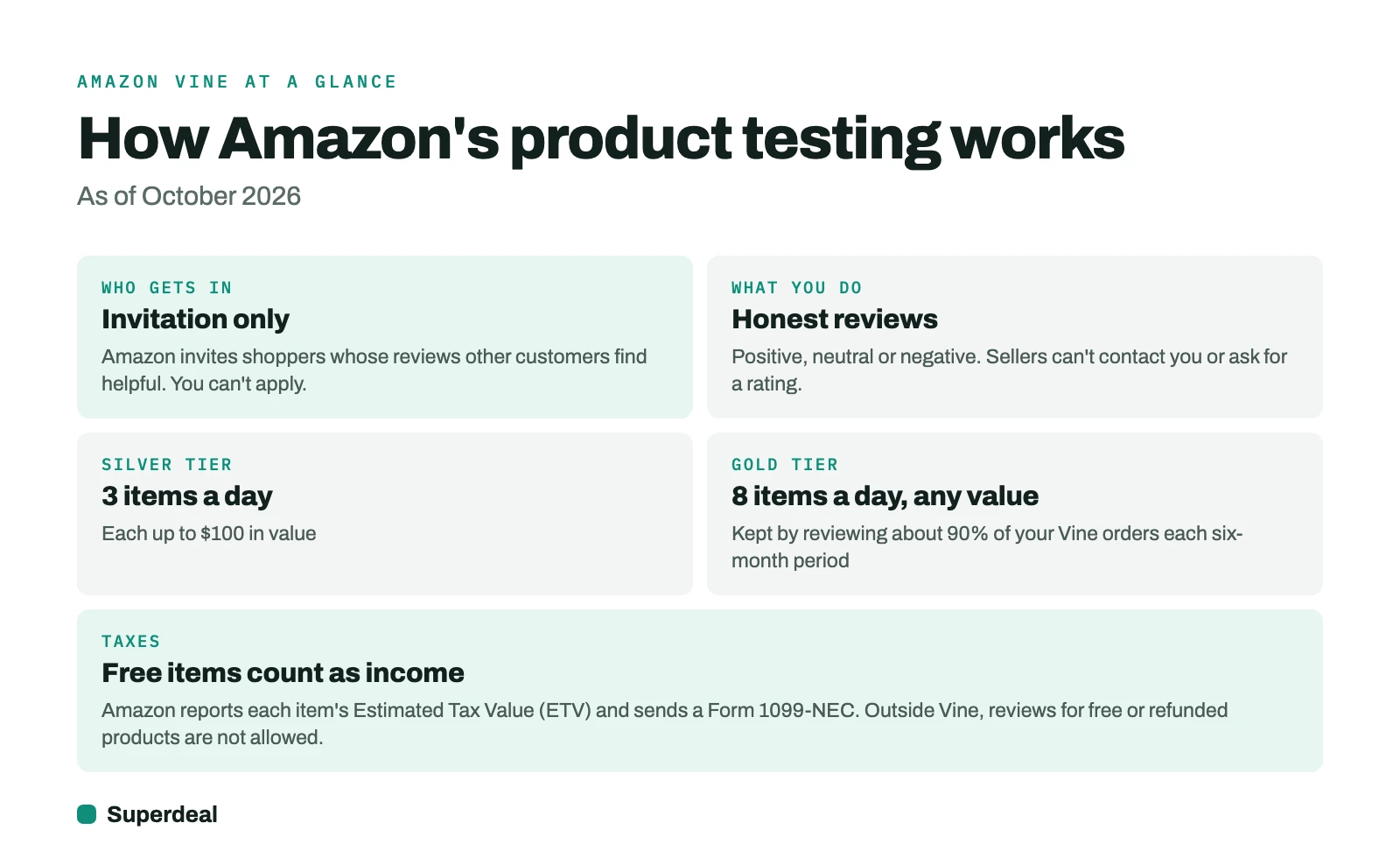
Amazon Vine is Amazon's official, invitation-only review program. Selected reviewers, known as Vine Voices, order products from participating brands free of charge and then share their honest opinions. Vine reviews appear next to other reviews with the label "Vine Customer Review of Free Product", and sellers and brands aren't allowed to contact Voices.
How Do You Get Invited?
You can't apply or pay to join. On its Vine page, Amazon says customers who consistently write insightful reviews are the most likely to be invited. The full selection process isn't public, but these habits help you build that kind of record:
Review products you own: Focus on purchases you've used long enough to judge properly.
Include useful details: Explain performance, features, strengths and shortcomings.
Add photos or videos: Show shoppers how the product looks or works.
Be balanced: Honest criticism can be more helpful than enthusiastic praise.
Follow review guidelines: Avoid promotional language and conflicts of interest.
No set number of reviews guarantees an invitation, and a smaller set of detailed, helpful reviews is a better bet than a long list of one-liners.
What Do Vine Members Receive?
Members can request eligible products at no cost. In return, they're expected to write honest reviews that follow Amazon's review policies. Amazon's guidelines also bar Voices from taking free products or payment directly from sellers or brands in exchange for reviews. Positive ratings aren't required. Amazon says Vine reviews can be positive, neutral or negative, so members are free to criticize a disappointing product. As of October 2026, members are placed in one of two tiers:
Silver: the starting tier for new members, with up to 3 items a day, each valued at $100 or less.
Gold: up to 8 items a day of any value. To reach and keep Gold, members must review a minimum number of Vine items and about 90% of their Vine orders within each six-month evaluation period.
To stay in the program, members have to keep reviewing what they order. Vine is not paid work: Voices get products, not wages, and those products are taxable (more on that below).
Other Legitimate Ways to Test Products Sold on Amazon
Manufacturers and research companies regularly look for consumer feedback, so a Vine invitation isn't your only chance to try products without paying full price.
1. Join Brand Product Testing Programs
Some manufacturers recruit testers through their websites, newsletters and customer communities. A kitchenware company might ask home cooks to try new utensils, and a skincare brand might recruit people to test a moisturizer over several weeks. Requirements vary with each program. Sometimes you fill in a questionnaire, other times you keep notes on how the product performs, and there may be a follow-up survey. Start with brands you already use and check their official websites for tester programs. They aren't always open, so check back now and then.
2. Participate in Consumer Research Studies
Market research companies and manufacturers sometimes recruit people for hands-on testing. Besides testing products at home, participants may attend interviews or visit research facilities. Compensation varies. Some studies offer free products, while others pay cash or gift cards. Unlike public customer reviews, these studies collect private feedback that companies use to improve design, packaging and marketing. Expect specific instructions, such as using a product for several days and answering detailed questions.
3. Contact Brands Directly
A smaller manufacturer might welcome feedback from people who know its products well. If you're an enthusiastic home baker, contact a kitchenware company and explain how you use your baking tools. Don't promise positive reviews or demand free products; ask whether the company recruits consumers for private testing. Many businesses won't reply, but a professional introduction can turn up opportunities that aren't widely advertised.
4. Become an Amazon Influencer
If you enjoy demonstrating products, the Amazon Influencer Program is another option. Eligible creators can recommend products, build a storefront and earn commissions on qualifying purchases. Brands sometimes offer products for promotional collaborations, but joining the program doesn't guarantee free products. You'll also need to meet the eligibility requirements and disclose any brand relationships. For more information, check out this guide on how to become an Amazon Influencer.
5. Receive Brand PR Packages
Companies sometimes send free products to journalists, creators and others who can introduce them to potential customers. These shipments are known as PR packages. Receiving a package doesn't automatically mean you have to post about it; expectations depend on what was agreed in advance. If a brand does want content, understand the requirements before you accept. In the US, a public post about a free product needs a clear disclosure, as the FTC explains in Disclosures 101 for Social Media Influencers. Learn what a PR package is and how these arrangements work.
How to Become a Product Tester: 5 Steps
You don't need professional reviewing experience or expensive equipment.
Step 1: Choose Familiar Product Categories
Focus on products you already understand, such as electronics, tools, beauty products or kitchen supplies. Experience helps you notice what casual users miss.
Step 2: Write Helpful Reviews
Practice by reviewing products you've already bought and used. Rather than saying a pair of headphones is excellent, describe the battery life, comfort and sound quality. How do they hold up day to day? Mention shortcomings when they matter. Balanced feedback helps shoppers make informed choices.
Step 3: Prepare a Testing Profile
Write a short introduction describing your experience, interests and favorite product categories. A handful of strong review samples is enough; you don't need a website. If you also post on social media, a free creator profile on Superdeal lets brands find you and send you offers.
Step 4: Find Genuine Opportunities
Check established consumer research programs and official manufacturer websites. Read the eligibility requirements before you apply, and make sure the company is real before sharing personal information.
Step 5: Track Your Applications
Keep a simple spreadsheet of the companies you've contacted, with dates, responses and testing deadlines, so you know which programs are worth approaching again.
What Do Product Testers Have to Do in Return?
It depends on the program. Vine members write honest reviews under Amazon's rules. Research participants may attend interviews, complete surveys or document how a product performs. Brand testers might report on anything from durability and packaging to ease of use and specific features. Content creators may agree to publish photos and videos. Before accepting any product, ask whether you can keep it, what feedback is required and when it's due. And never post an Amazon review of a product a seller gave you, discounted or refunded, whatever star rating you would give it. Outside Vine, that breaks Amazon's rules. Real testing produces useful feedback, not inflated ratings.
Do You Pay Taxes on Free Products?
Usually, yes. In the US, products you receive in exchange for a review, a post or other feedback generally count as taxable income at their fair market value, the same way the IRS treats bartering income. Vine shows an Estimated Tax Value (ETV) for each item, and Amazon treats that value as taxable income. If your yearly total passes the federal reporting threshold, Amazon sends you a Form 1099-NEC, but the income is taxable even if no form arrives. Keep a record of the products you receive and their value, and ask a tax professional about your own situation.
How to Avoid Product Testing Scams
Free products attract scammers who pose as real companies and testing programs. Watch out for these warning signs:
Upfront fees: Be suspicious of anyone asking you to pay for guaranteed testing opportunities.
Guaranteed invitations: No outside company can sell you access to Amazon's invitation-only review program.
Refund-for-review offers: A seller who offers a refund, gift card or free product for an Amazon review is breaking Amazon's rules, whatever rating they ask for.
Account credential requests: Never share your Amazon password or verification codes with so-called recruiters.
Suspicious messages: Check unsolicited offers on the company's official website.
Unrealistic earnings: Testing rarely provides a dependable full-time income.
Be especially careful when someone asks you to:
Buy the product
Post a 5-star review
Wait for a refund
Even if the seller really pays you back, this breaks Amazon's policy. Amazon can remove the review and suspend or close your account. When a refund depends on a positive review, the seller is also breaking the FTC's rule against buying reviews. Real companies explain what they need without asking for Amazon reviews.
Can You Make Money Testing Products?
Some opportunities pay cash through consumer research, while others pay through content creation or paid testing assignments. Free products aren't the same as a paycheck, though. Vine gives you products, not wages. Brand programs vary, and some take a lot of time for modest rewards. Getting a $150 appliance sounds exciting, but if you don't need it, it isn't worth much to you, and the time it takes plus the tax on its value cut the benefit further. If your priority is earning money, content creation or paid research may be better paths. If you like discovering products and sharing your opinions, testing can be an enjoyable hobby.
Is Becoming an Amazon Product Tester Worth It?
Product testing can be rewarding if you enjoy trying products and helping others decide. Vine is a real possibility, but invitations aren't guaranteed; consumer research, product demonstrations and brand testing are other good routes. Start with what you already own, and write thoughtful reviews of those products. Explore real programs and keep improving your feedback. Always avoid offers promising unrealistic rewards. You probably won't end up with an endless supply of free electronics. With patience and realistic expectations, though, you can find genuine chances to try new products without paying full price.
Frequently Asked Questions
Can you apply to become an Amazon Vine Voice?
No. Vine is invitation-only, and Amazon picks customers who consistently write insightful reviews. Nobody can sell you a place in the program.
Can I review a free product on Amazon if my review is honest?
Not outside Vine. Amazon bans any review in exchange for a free, discounted or refunded product, even an honest one. The only exception is free advance copies of books, when no review is required.
Do Amazon product testers get paid?
Vine Voices aren't paid; they get products. Some consumer research studies pay cash or gift cards, and creators can earn through brand deals or the Amazon Influencer Program.
Are free products from testing taxable?
Generally yes, in the US. Products received for a review or post count as income at fair market value. Vine lists an Estimated Tax Value for each item and sends a Form 1099-NEC once your yearly total passes the reporting threshold.