How to Make Money as a Content Creator: Nine Income Streams
Nine ways creators actually earn, with what each realistically pays, how long it takes to start, and who it suits. Plus the two to begin with when your audience is still small.

Founder & CEO, Superdeal
Learning how to make money as a content creator involves more than just unlocking ads or waiting for a company to offer you a sponsorship. A sustainable creator business typically combines multiple revenue sources; each is likely to feature different risks, requirements, and timelines.
The right mix depends on everything from your subject and skills to audience and available time. You might earn your first dollar with too few followers, whereas other opportunities require months of consistent growth. Understanding the major content creator income streams can help you decide what to build right away compared to what can wait.
So, just how much do content creators make?
Some earn a little bit of spending money, while established creators might build six-figure businesses. These extremes aren't particularly helpful when planning your next move. Take a better approach by comparing how each income stream works, what each can realistically produce, and whether each option fits your current position. The following are nine categories to consider.
1. Brand Deals and Sponsorships
A brand deal pays you to feature a company, product, or service in your content.
An agreement might cover a brief mention or a dedicated video, but it could span several posts or even an entire campaign across multiple channels. Your compensation will depend on your reach, niche, and production quality.
Smaller creators might earn $100 to $500 per video or post; established creators might charge thousands of dollars. Rates increase when brands want exclusivity, raw footage, or long-term permission for content reuse. A focused audience might command higher rates than a larger but less engaged following.
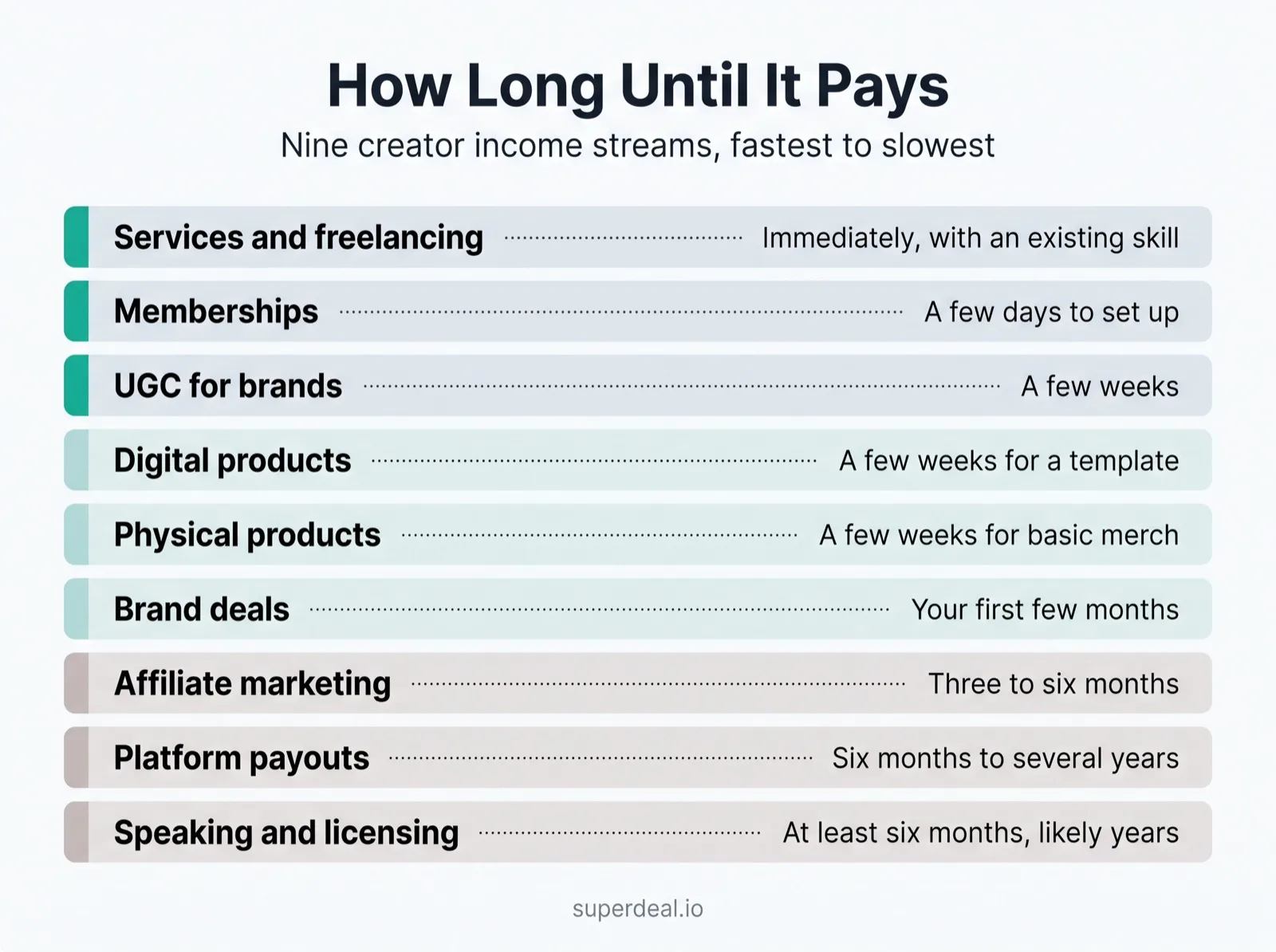
You might secure a small sponsorship in your first few months, but dependable inbound offers usually take longer to secure. After you learn how to get brand deals, you can directly pitch suitable companies. Sponsorships suit creators who can incorporate promotions without compromising their audience trust. Before negotiating, prepare an influencer rate card, but adjust each quote to reflect the campaign's actual scope.
2. UGC: Making Advertising Content for Brands
UGC stands for user-generated content. It's promotional material created for a company to use in advertisements or publish on its own accounts. Specific examples include product demonstrations and testimonial-style videos, but you might also do a photo set, voiceover, or unboxing.
Unlike an influencer sponsorship, UGC typically doesn't depend on your follower count. The company primarily pays you for production and presentation skills. A beginner might charge between $100 and $250 for a basic short-form video, but experienced creators might earn from $300 to $750 per asset. Prices can increase due to everything from paid usage rights and raw footage to additional hooks and extra revisions.
You could build a sample portfolio and start pitching in just a few weeks, but finding your first client might take longer. Becoming a UGC creator can offer an accessible entry point for a small account. UGC suits creators who can follow a brief, meet deadlines, and respond to feedback professionally. You don't necessarily need to appear on camera, since brands also purchase voiceovers and hands-only demonstrations; photography and editing are options as well.
3. Affiliate Marketing and Commissions
Affiliate marketing pays you a commission when someone makes a purchase through your tracked link or code. You can recommend products through:
Videos
Articles
Newsletters
Podcasts
Livestreams
Social media posts
You can use these channels individually or in combinations.
Commission rates vary a lot. Retail programs might only pay you a small percentage of each sale, while digital services and software companies sometimes offer recurring payments or higher rates. Your earnings will depend on product price, buyer intent, traffic, and conversion rates. A small creator may earn less than $100 per month, but a well-developed collection of buyer-focused content could eventually generate hundreds or even thousands of dollars each month.
You can begin as soon as an affiliate program accepts you. However, meaningful income often takes three to six months to develop.
Start with reviews and tutorials before moving to comparisons and resource pages. All four of those options tend to perform best because they reach people already considering a purchase.
This stream suits creators who naturally discuss useful products, especially if you can explain which buyers they fit. Try to avoid recommending unrelated items solely for a commission, because that can quickly damage trust. Always disclose affiliate relationships clearly.
4. Platform Payouts and Creator Funds
Facebook content monetization, TikTok's Creator Rewards Program, and YouTube advertising are three examples of platforms paying qualifying creators through rewards programs and advertising revenue. For Instagram, see our guide on how to monetize Instagram. These programs have different eligibility standards and might change their payment formulas over time. Earnings depend on everything from qualified views and watch time to advertiser demand and subject matter. Your audience location and content format also matter. Thousands of short-form views might only produce a few dollars, but longer content in strong advertising niches can earn significantly more.
Sadly, viral reach doesn't always translate into equally impressive revenue.
If you want consistent payouts, keep in mind that building enough traffic can take anywhere from 6 months to several years. Even after you qualify, monthly results can fluctuate drastically.
Platform payments are best suited to creators whose work attracts repeat viewing; content that continues to draw traffic after publication also helps. Established entertainment formats, searchable tutorials, and educational videos all tend to perform well, but you have no control over the advertising market, eligibility rules, or platform algorithms.
Never rely on platform payouts as a guaranteed salary. Treat them as one of many layers to your business.
5. Digital Products
Digital products include ebooks, workshops, and templates. There's no physical inventory, meaning you can sell the same product over and over with relatively low fulfillment costs. A simple download might cost less than $10, but specialized training could yield hundreds of dollars. For instance, if you sell a $20 template 25 times, you'll collect $500 before fees and taxes. Higher-priced products don't need as many sales, but customers will expect more polish, depth, and support.
You can put together a small guide or template in just a few weeks; a comprehensive course might need several months of research, testing, and production before you can even start promoting it. Confirm people want your product before investing too heavily in it.
If you can turn your knowledge into a repeatable solution, digital products might suit you. Look at your audience for frequently asked questions. Then test your concept with a pre-order, a waitlist, or a small pilot.
Digital products can usually become scalable. However, they still require promotion, occasional updates, and ongoing customer service.
6. Services and Freelancing
Even if your posts generate no revenue, your content can attract clients. Writers can sell content packages. Video creators might edit footage for businesses. Designers may offer branding services. Demonstrate your skills by using your public work as a portfolio.
Services commonly provide the quickest route to income because you only need several clients. Based on your specialty, one project might pay several hundred or a thousand dollars. If you already possess a marketable skill, you can start immediately. That said, building a reliable client pipeline might take a few months of consistent outreach.
Consider this option if you're a creator who publishes professional or educational content. Helpful posts let potential clients evaluate your expertise and communication style before hiring you.
Capacity is the primary limitation.
Every client requires time, which eventually limits your earnings. Fortunately, there are three ways to grow:
Raise rates
Standardize packages
Hire assistance
Until then, freelancing can fund ongoing content production while you develop other revenue sources that aren't as directly tied to your hours.
7. Memberships and Subscriptions
Memberships allow your loyal followers to pay for ongoing content or access to features such as early releases, private discussions, or behind-the-scenes materials. You don't need a massive audience for this. If you have 50 people paying $8 per month, you'd generate $400 in gross recurring revenue. The challenge is giving people a clear reason to join up and stay subscribed.
Setting your membership up might only take a few days. Building meaningful recurring income, however, can take six months or more. Your followers need confidence that you'll continue to deliver on your promises.
This stream suits creators who have an engaged community and a reliable publishing routine. Recurring revenue provides more stability than one-time campaigns, although it also creates recurring obligations. Choose benefits you can maintain during busy periods. Also, avoid promising extensive personal access for a low monthly price; answering individual questions can turn a scalable membership into a demanding service job.
8. Physical Products and Merchandise
Physical products often include branded clothing, prints, and accessories, but they can also be books or items designed to solve an audience problem. Merchandise represents the identity surrounding your content, while functional products provide a more practical benefit.
Print-on-demand services give you a chance to start without buying inventory. However, they usually offer lower profit margins and come with less quality control. Conversely, buying inventory can improve your per-sale earnings, albeit with the responsibilities of storage and shipping, as well as the risk of unsold goods.
Print-on-demand shirts might generate only a few dollars in profit, but some can go as high as $15. Original products might earn more per purchase, but development costs are typically higher. You can usually launch basic merchandise in a few weeks, but custom products might take at least six months.
Consider this approach if you're a creator with distinctive artwork or recognizable phrases. It also suits any audience connected by a strong identity. However, it's rarely an ideal initial revenue source for a small general-interest account. Test demand through mockups, limited releases, or preorders before committing money to inventory.
9. Speaking, Consulting, and Content Licensing
Established expertise can lead to paid speaking engagements, consulting projects, and workshops. Licensing agreements are also possible. Publications and companies might pay for permission to reuse one of your existing videos or photos. Newer consultants might only command a few hundred dollars for a short session, but experienced specialists may charge several thousand for a presentation or workshop. Licensing payments vary based on how a buyer uses the work, with higher fees applying to commercial advertising, exclusivity, and lengthy usage or large territories.
You have to demonstrate your credibility first.
These opportunities typically take at least six months to develop. It's safer to assume you'll need several years. Shorten these timelines by publishing thoughtful content and documenting the results. Clearly inviting professional inquiries also helps.
Look into this if you're a creator with specialized knowledge, reusable content with commercial value, and a compelling personal story. Define your terms carefully. A license should state where the content can appear, how long a buyer can use it, and whether the rights are exclusive. Don't surrender ownership simply because a company requests to "use" your work.
Which Two Income Streams Should You Start With?
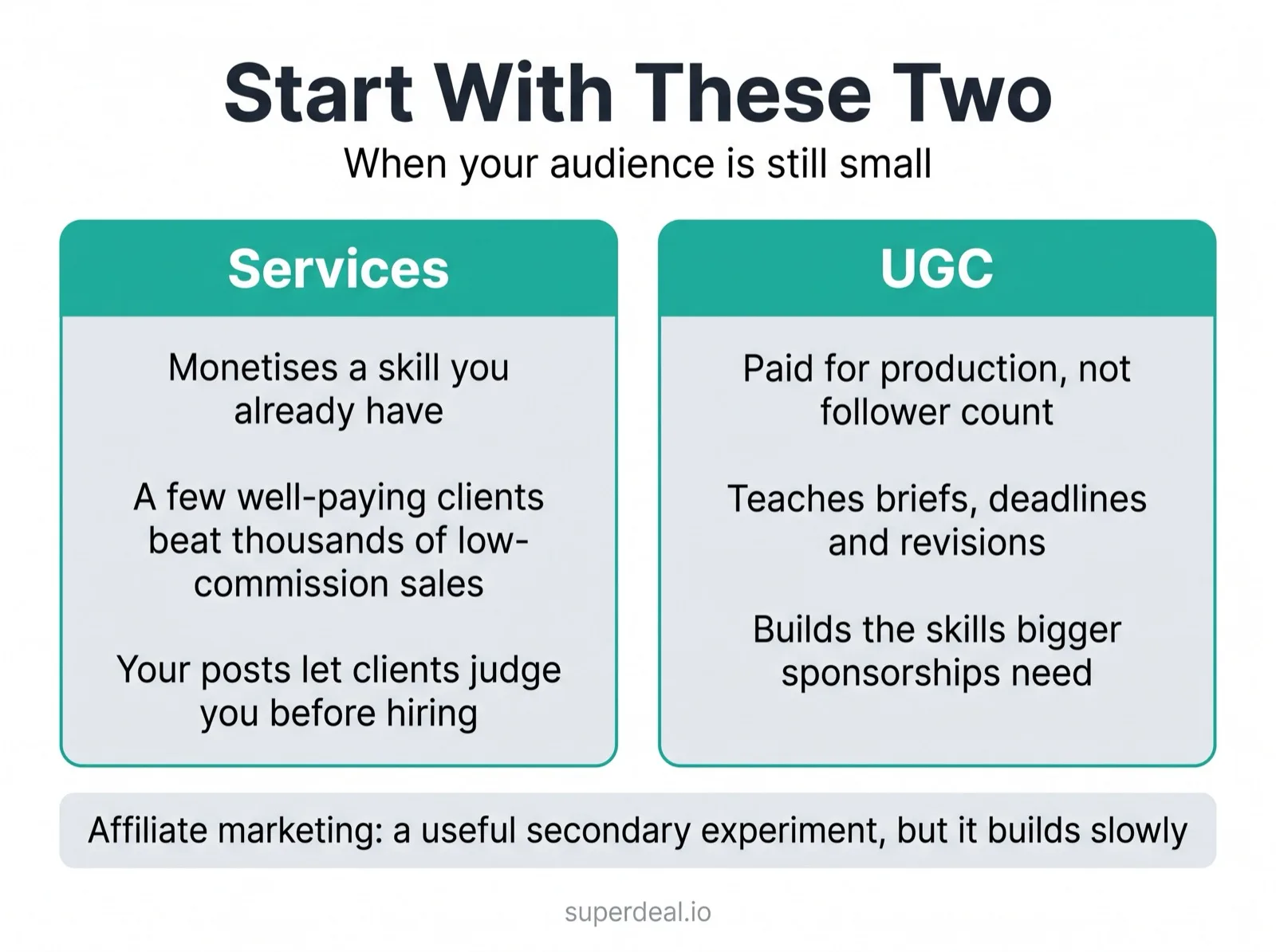
With a small audience, services plus UGC are likely to be your strongest starting combination. Both let you make money by creating content without waiting for major follower growth or platform eligibility.
Services monetize a skill you already possess.
A handful of well-paying clients can produce more immediate revenue than thousands of low-commission sales, and your posts also help potential clients evaluate your knowledge and style prior to hiring you. It's long been true in many industries that lots of businesses get 80% of their revenue from just 20% of their clients; this is proving true in the digital realm, too.
UGC offers a second route that relies on content production rather than audience access. It teaches you how to do everything from interpreting briefs and communicating with brands to handling price revisions and delivering commercial work. Those skills prepare you for potentially greater sponsorships later.
Affiliate marketing can be useful as a secondary experiment if you're already discussing relevant products. Having said that, it tends to build slowly. Add links to your content that genuinely help people make their decisions. Track the topics that create clicks and purchases, so you know what to reinforce.
These aren't the only ways to make money as a creator, to be sure. Your best combination might be different if you already have a loyal email list, professional expertise in a particular field, or a highly engaged niche community.
Starting off with only two major streams has benefits, regardless of which you choose. You have enough time to test each one thoroughly.
What You Need Before an Income Stream Can Work
Introduce your work to potential partners with a media kit. You should explain who you are and what you cover, and also include who follows you and how your content performs. Don't just fill the document with every metric available to you; include relevant examples and current audience data.
Next, you need rates. Establish the minimum amount required to make any project worthwhile. From there, you can adjust your quotes according to rights and scope. Your rates have to account for more than just the minutes you spend recording; you also need to consider planning, production, and revisions. Communication, taxes, and equipment also factor in.
You need a written contract. Even a friendly agreement can turn confusing when expectations aren't documented. Identify the deliverables and deadlines. Specify revision limits and cancellation terms. Set concrete terms regarding payment, ownership, and usage rights.
Finally, make sure there's an obvious way for opportunities to reach you. Place a professional email address in your profiles, or link to an inquiry form. Creator marketplaces also help companies discover you. Complete an onboarding profile to give brands useful information when they evaluate potential partners. As your inquiries increase, develop a system for how creators manage brand deals. A simple tracker can record contacts and campaign status, helping you manage everything from deadlines and agreed rates to deliverables and payment dates.
Do Not Skip the Business Side
Getting an enthusiastic yes from someone feels like a crucial part of the deal. It's certainly a memorable moment on your road to success.
Yet, there's more to it than this.
In practice, your project's profitability is determined by two other factors. One is your ability to define the work, and the second is collecting payments.
Before you start anything, agree on the scope in writing. Specify the format and number of deliverables. What does the approval process look like? When will the posting dates be? How many revisions are included, and who owns the usage rights? If clients request additional work later, send them new quotes or written change orders.
Your invoice should contain:
Your contact information
The client's details
An invoice number
A clear description of the work
The amount owed
The payment deadline
Have an organized system. Use it to keep copies of invoices and contracts.
Payment terms include options such as Net 15 or Net 30, meaning the client has 15 or 30 days to pay after the invoice date or another agreed trigger. Confirm when you're allowed to invoice. Some companies pay upon delivery, whereas others begin the payment period only after content goes live or an invoice is entered into their accounting systems.
How much do content creators make? The honest answer is that revenue varies, and revenue isn't always profit. What you make is reduced by fees and taxes, software and equipment, contractors, and unpaid administrative time. Anything left over is what you get to keep.
Strong creator businesses rarely depend on a single source. They combine immediate income with opportunities that can grow with time. If you want to make money creating content, start with a stream that fits your current assets. Then, test it consistently. Only add another after the first has a workable system in place.