What Is a Nano Influencer? How Small Creators Get Brand Deals
A nano influencer has about 1,000 to 10,000 followers and a close, engaged audience. Why brands work with them, what they usually get, and how to land your first deals.

Founder & CEO, Superdeal
You post a few times a week, and your followers actually reply to your stories, save your recipes or outfit ideas, and ask where you bought that sweater. Yet your follower count sits somewhere under 10,000, so you assume brands will never look your way.
The good news is that your size has a name, and companies are paying more attention to it than you might expect. If you've ever asked yourself what is a nano influencer, there's a good chance you're looking at one in the mirror. This guide explains what the term means, why brands like working with creators your size, what you can realistically earn, and how to land your first deal.
What Is a Nano Influencer?
A nano influencer is a social media creator with a small but engaged following, usually between 1,000 and 10,000 followers. Some marketers draw the line a little lower or higher, so you'll see slightly different numbers depending on who you ask, but in the US that 1,000 to 10,000 range is the one most people use.
The word "nano" describes audience size and says nothing about talent or quality. A nano influencer might post on Instagram, TikTok, YouTube, Pinterest or a blog, and they might talk about skincare, budget travel, parenting, fitness, home cooking, crochet or their favorite local coffee shop. The platform and topic matter less than the relationship they have with the people who follow them.
When you have 3,000 followers, a good number of them probably know your name, your dog's name and your favorite taco spot, which means they trust what you say because you sound like a friend and not like an ad. Brands understand this, and it's a big reason nano influencers have become such a useful part of how companies spread the word.
These types of influencers share a few traits. They usually don't have an agent or manager, they often don't have a media kit yet and they make their content on a phone in a regular kitchen or living room. Their posts tend to get real comments, saves and shares for their size, and they stick to a topic, even if it's a loose one. If that sounds like you, you're closer to your first brand deal than you think.
Nano vs Micro: What's the Difference?
The simplest difference is follower count. Nanos sit at about 1,000 to 10,000 followers, while micro influencers usually fall between 10,000 and 100,000. The gap goes beyond the numbers, though. Micro influencers often have a more polished presence, with a media kit, a steady posting schedule and a few past partnerships to point to. Brands usually expect to pay them, and many have a rate card ready to send. Because their audiences are larger, each post reaches more people.
Creators in the smaller tier usually reach fewer people, but those people tend to be closer to them. Followers are often friends, neighbors, coworkers and fans of the same niche, so a recommendation carries a lot of weight.
You can picture two restaurants to see the difference. A micro influencer is the popular neighborhood spot with a steady line out the door, and a smaller creator is the cozy place where the owner knows your usual order. Both are valuable to the right brand, and many micro influencers began exactly where you are now. For a closer look at the next tier, see our guide to micro influencers.
Why Brands Choose Small Creators
Trust is the first reason. Many people have grown used to large accounts that promote a new product every few days, so a creator who shares a favorite find once in a while feels more genuine. That kind of credibility is hard for a brand to create on its own.
Engagement is the second reason. Smaller accounts often see a larger share of their followers liking, commenting and replying, which means a post with 40 real comments from 3,000 followers can be more valuable to a brand than 200 comments spread across 300,000 followers.
Budget also plays a part, especially for small and growing companies. Sending a free product to ten creators costs far less than paying one famous creator, and it also introduces the brand to ten different communities. Those communities are usually focused as well. For example, a company that makes vegan dog treats would much rather reach 2,000 people who love their pets and eat plant-based foods than a large crowd with no particular interest.
Brands also appreciate the content itself, since photos and videos made in real homes feel natural, and if your agreement allows it, the brand can reuse them on its own pages and ads. Working with several small creators at once lets a company test a product, learn what resonates and decide where to invest next, which makes nano influencers a low-risk way to learn.
What Do Creators at This Size Usually Get?
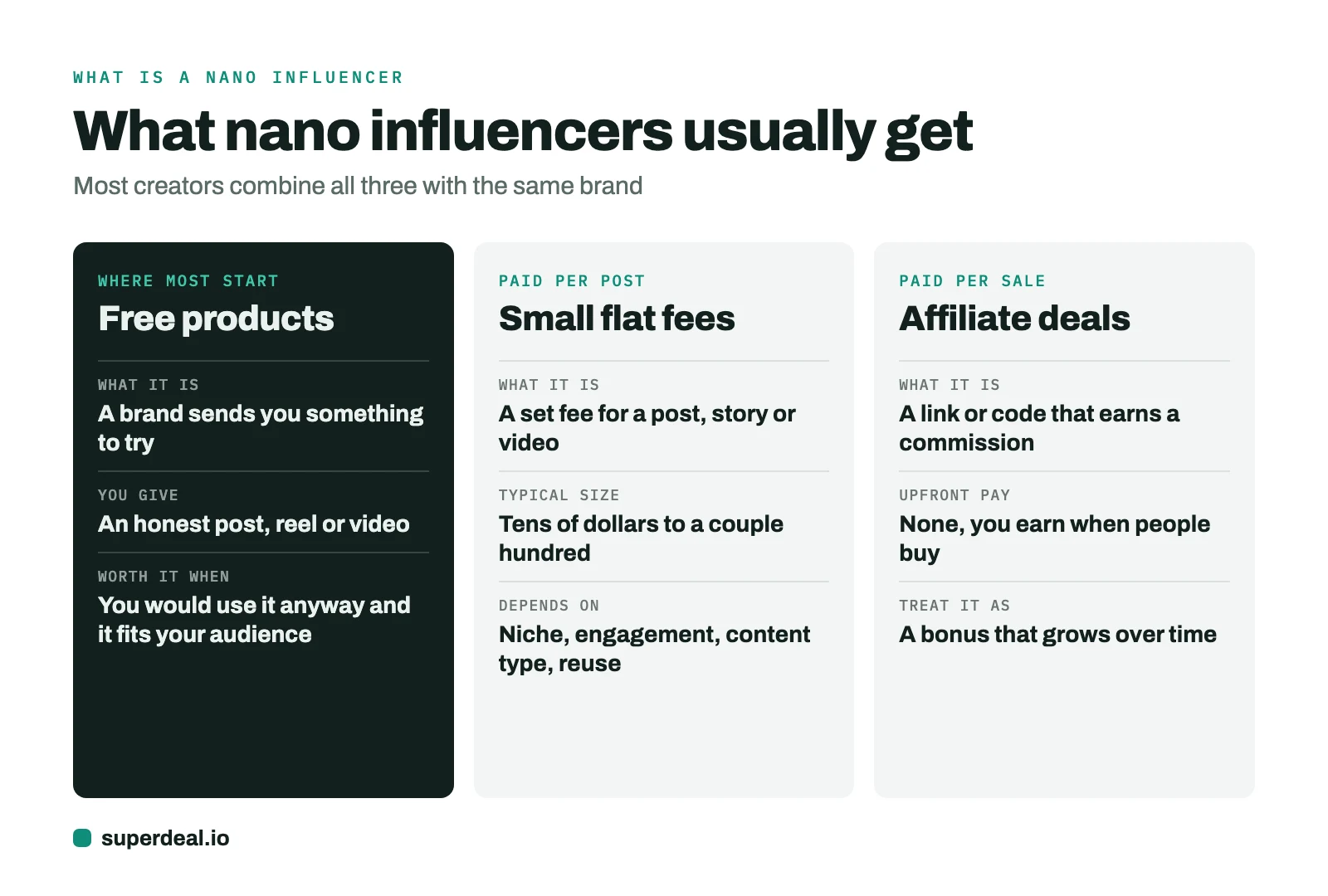
Compensation varies quite a bit, and early deals are often modest. Most of them fall into three types, and understanding each one will help you decide whether an offer is worth your time.
Free Products
Many creators start with gifting, which means a brand sends you something to try and you share your honest thoughts in a post, reel or video. This works well when the product is something you would happily use anyway and the brand matches your audience. It also helps to weigh the time involved, since a quick post for a high-quality item feels very different from a long video for a very small product. Gifted collaborations build your portfolio too, because a few well-made posts give you examples to share with the next brand. A free product still counts as a material connection, so a post about a gift needs a clear disclosure, such as "#ad" or "Thanks to [Brand] for the free product," just like a paid one.
Small Flat Fees
Some brands pay a set fee for a post, story or video. At this level the amount usually runs from tens of dollars to a couple hundred, depending on your niche, your engagement, the type of content and the brand's budget. A food creator with a very active audience may earn more than someone with the same follower count and quieter posts.
There's no official price chart, so it's normal to see different rates from different brands. A helpful way to set yours is to think about how long the content takes to make, whether the brand can reuse it and roughly how many people it could reach.
Affiliate Deals
With an affiliate deal, you receive a special link or discount code and earn a commission, often a percentage of the sale, whenever someone buys through it. Rates depend on the company and the type of product. Brands like this option because there is no upfront payment, which makes more of them open to working with smaller creators. Since you earn when people purchase, results can vary from one post to the next, so it helps to treat affiliate income as a bonus that grows over time.
Many creators combine all three, such as a free product, a small fee and an affiliate link from the same company, and it's perfectly reasonable to ask what the full offer includes before you decide.
How to Get Your First Brand Deals
Landing a first partnership mostly comes down to making yourself easy to find, easy to understand and easy to work with. The steps below give you a clear path, and if you want even more detail, this guide on landing your first brand deal can help.
1. Choose a Clear Niche
Brands like to understand what you are about within a few seconds of landing on your page. If your feed mixes recipes, thrifted clothes and gym photos, narrowing the focus a little makes it easier for the right brands to find you. You can always evolve your niche later.
2. Polish Your Profile
A clear bio that says what you create and who it's for goes a long way. Adding a business email address and a friendly profile photo makes it simple for people to reach you.
3. Know Your Numbers
You don't need special software for this step. Screenshots of your insights showing average views, top locations, age range and engagement are enough, and many small creators never share their numbers, so having yours ready helps you stand out in a good way.
4. Create a Simple Media Kit
A media kit is a one-page introduction to you and your work. It can include a short bio, your main platform, your follower count, your engagement, a few favorite posts and your contact details.
5. Start With Brands You Already Use
The most natural partnerships begin with products you already enjoy, so look at what's in your kitchen, bathroom or camera bag. Following those brands, leaving thoughtful comments and tagging them when you use their products can open the door to a conversation.
6. Reach Out Directly
Many small and mid-sized companies list partnerships or PR email addresses on their website. A brief, friendly message that explains who you are and attaches your media kit is usually enough to begin. Many brands take a while to respond and some won't reply at all, which happens to experienced creators as well. If this happens, send a follow-up email and then move on to the next brand.
7. Let Brands Come to You
You do not have to find every opportunity on your own. Create a free creator profile on Superdeal so brands can find you and send you offers.
8. Deliver With Care and Report Back
Once you land a deal, doing what you promised on time builds a strong reputation. In the US, you also need to label the partnership clearly: turn on the platform's paid partnership label and add a plain "#ad" or "Ad" at the start of the caption, because the FTC says a platform tag on its own may not be enough. The FTC explains the rules in Disclosures 101 for Social Media Influencers. After your post goes live, a quick note to the brand with your views, comments and saves is a thoughtful touch, and it can turn a one-time gift into a paid repeat collaboration.
Helpful Things to Keep in Mind
A few reminders can make the process smoother. Saying yes only to products that suit your audience protects the trust you have built, and authentic engagement matters more than any number, since brands can usually tell when followers or comments are not real. It's also a good idea to have the details in writing before you begin, including what you will create, when it's due and what you will receive.
It's okay to value your work as well. Starting with gifted products is a good way to gain experience, and as your content grows stronger, asking for payment is a natural next step.
Your Size Is a Strength
Small creators have a close-knit audience and real influence over the people who follow them, which is exactly what many brands are searching for right now. You don't need 100,000 followers to begin. Creators who keep showing up consistently and learn from every partnership are the ones who move on to bigger deals. You can begin with free products, grow into fees and affiliate income over time and keep your content true to who you are.
Frequently Asked Questions
How many followers is a nano influencer?
Usually 1,000 to 10,000. Some brands start the tier a little lower or end it a little higher, but that range is the one most US marketers use.
Do nano influencers get paid?
Often, yes, though many first deals are gifted products. Small flat fees and affiliate commissions become more common as your content and engagement grow.
What is the difference between a nano and a micro influencer?
Nano influencers have about 1,000 to 10,000 followers, micro influencers about 10,000 to 100,000. Nanos reach fewer people but usually have a closer, more engaged audience.
Do I need a media kit as a nano influencer?
It helps. A one-page media kit with your niche, numbers and best posts makes you easier to say yes to, and most creators your size do not have one yet.