How to Get PR Packages (Even Without a Big Following)
Brands send free product to creators who look worth the risk, not to the biggest accounts. Where the lists live, how to ask, and the mistakes that end the relationship after one box.

Founder & CEO, Superdeal
Many small influencers with under 20,000 followers are on the lookout for their next big opportunity to become the "face" of one or more brands. You're not alone in wondering how you can get sent free products and enjoy the life of a brand ambassador without a large audience. Social influencers often search online about this topic and use keyword phrases like "How to get PR packages?" "How to get PR packages without followers?" or "How to find PR packages for small influencers?"
The good news is that you can turn around your situation quickly. You don't need a big following to receive PR packages. This guide outlines everything you need to do as a content creator this week to start out.
What Is a PR Package?
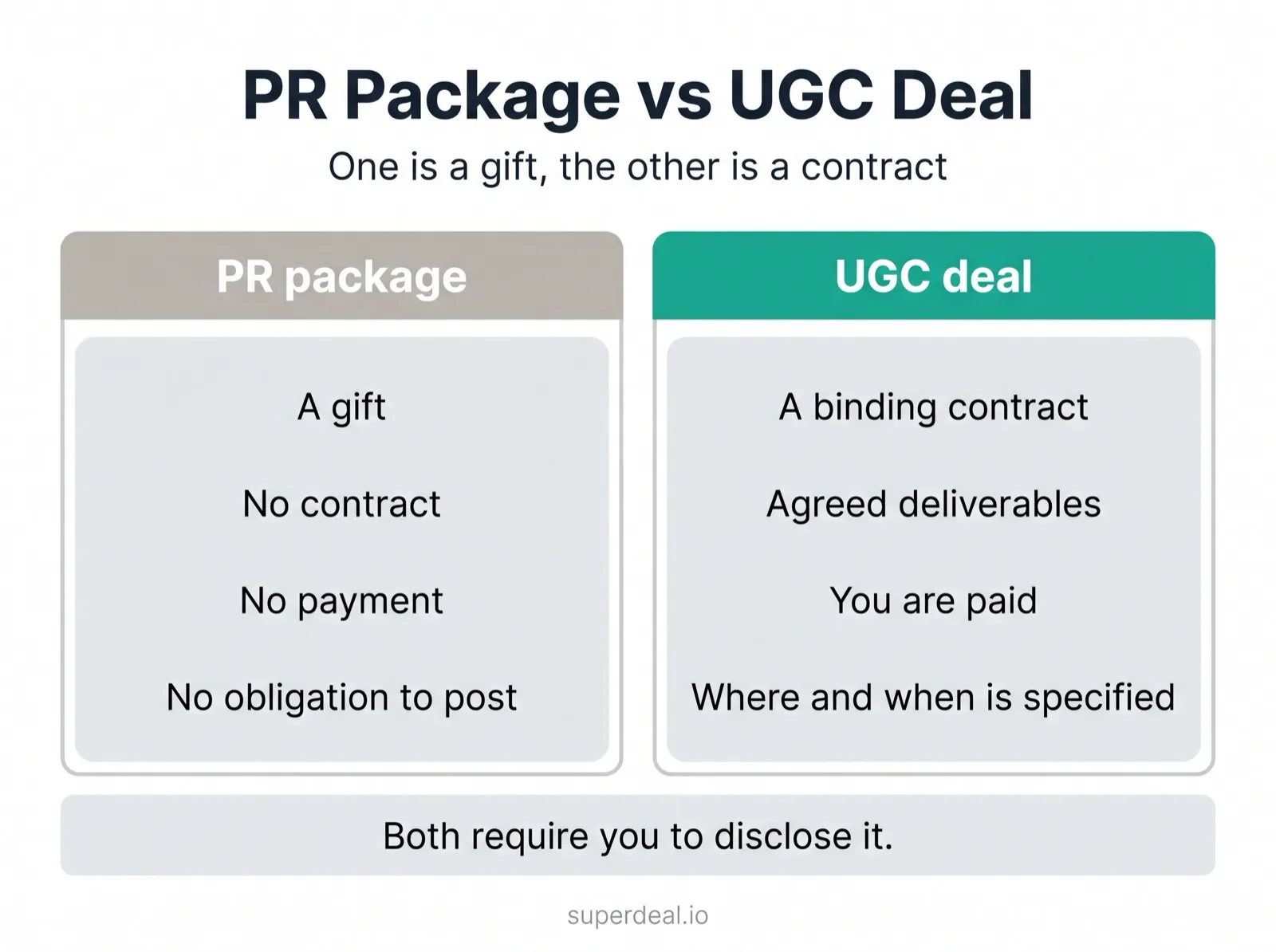
A PR package, or PR box, is free product a brand sends a creator around a launch, hoping you will show it to your followers. You keep it, nobody pays you, and you owe no post unless you agreed to one first. For what is usually inside, real examples and what brands expect back, see our guide to what a PR package is.
PR Package Requirements
A company that sends an out-of-the-blue PR package gift doesn't usually offer a contract or guarantee any sort of payment during the initial contact. Instead, the brand hopes you will use the products and then talk authentically about your experiences via your content channels and other platforms. The brand considers any mention a form of organic, buzzworthy, word-of-mouth advertising.
Typically, they include a greeting card or letter in the box that explains why they chose you and specific product details. Make no mistake, this message is designed to influence your actions. For example, they might mention details they think you'll like or want consumers to talk about more. Even if they tell you there's no requirement to use or review the products, they might say they would "appreciate" a positive mention or unboxing video on your channels. They might even briefly mention the potential for future reciprocal gifted or paid collaboration opportunities.
You're under no obligation to do anything. You can use the products without ever discussing them anywhere. That said, not mentioning the gift publicly could result in that brand, or even other brands and followers, never again interacting with you. A brand that you love might remove you from their list for future PR packages. Also, if one or more products arrived with documentation that restricts immediate resale and you then sell one of the gifts with or without providing a public review, you could face legal complications.
Do Brands Care About Follower Count?
Companies certainly care about high follower numbers when initially making their lists of influencers. Yet many marketing teams care more about quality engagement than follower counts. Followers obviously matter, but an influencer who posts quality content with just one account and a small following in a specific niche typically matters more if a company's research indicates that the influencer positively affected their traffic and sales.
Brands care whether your followers are real people interested in what you have to say and post, random bots and ghost accounts, or consumers easily influenced by rapidly changing cultural interests and sales trends. They usually don't want help promoting their products from high-follower-count influencers who receive a lot of random or irregular traffic.
If you create high-quality content, see a high percentage of engagement from your followers, and your content performance is so great that one or more social platforms promote it outside of your immediate sphere of influence, you have the same chance of receiving a PR gift box as a large, mega or celebrity influencer. Companies also consider whether your followers fit their chosen target market in terms of demographics and niche.
Top Ways to Find PR Package Lists
Believe it or not, you don't need to do much work to find PR package opportunities. A simple online search using the questions "How to get PR packages for free?" and "How to get free PR packages?" can quickly turn up leads. That said, you can also find more direct information quickly by searching the name of a specific brand or company with the phrases "brand ambassador programs," "creator programs," or "micro or nano influencer programs," with or without "PR" or "PR packages."
Brand newsletters and PR agency lists also frequently mention details about PR box opportunities. Additionally, community groups centered around specific brands, products and geographic locations have these details. When you find an opportunity that interests you, then you call or email the PR contact.
Beyond these methods, you can also attract brands by using their names and the names of specific products as hashtags when you discuss a non-gifted product with your followers and others or post an unboxing video. Many companies only discover potential influencers who already use and talk about their products for PR programs via social platform monitoring and tracking tools that search for specific hashtags.
How Can You Improve Your Odds?
Start this week by rebuilding your public online profiles with attractive information. Make certain that you're consistently posting at least three times each week in your niche and tagging brands, products and overall topics appropriately. Since you never know which profile details for a specific account a company might use during their PR package influencer search, fill out everything. Bring all contact information up to date. If you haven't uploaded any video content and normally create only photo and text posts, take the time to create sample videos and link to them on your profiles.
When reviewing potential programs, try to find the public relations representatives handling press inquiries or the people responsible for accepting applications. Never send out mass direct messages to companies. Brands prefer emails or their own creator program application submission options. Whenever possible, interact with specific brands on social platforms and with other influencers in your interest area to increase your chance of being noticed by a company. Other influencers might also provide you with advice or share leads or partnership opportunities.
When you actively attempt to trigger a PR box response from a brand, you're sending an application or pitch to that company. As with paid job searches and applications, companies expect influencers to research them and reach out in specific ways. You need to show that you know a lot about them and their products to prove that you can act professionally and have the right background to talk knowledgeably about them with your followers and others.
How to Ask for a PR Package
Even if you fill out an online application for a specific program, you usually must include a short, personalized written or video pitch explaining why you're a great fit with that brand and how you can bring them leads and new consumer interest. If you're attempting to eventually become a collaborative brand ambassador or user-generated content creator, always make note of your plans in your pitch by saying something along the lines of "I hope to build a lifelong and strong relationship with your company" instead of talking about product or monetary rewards.
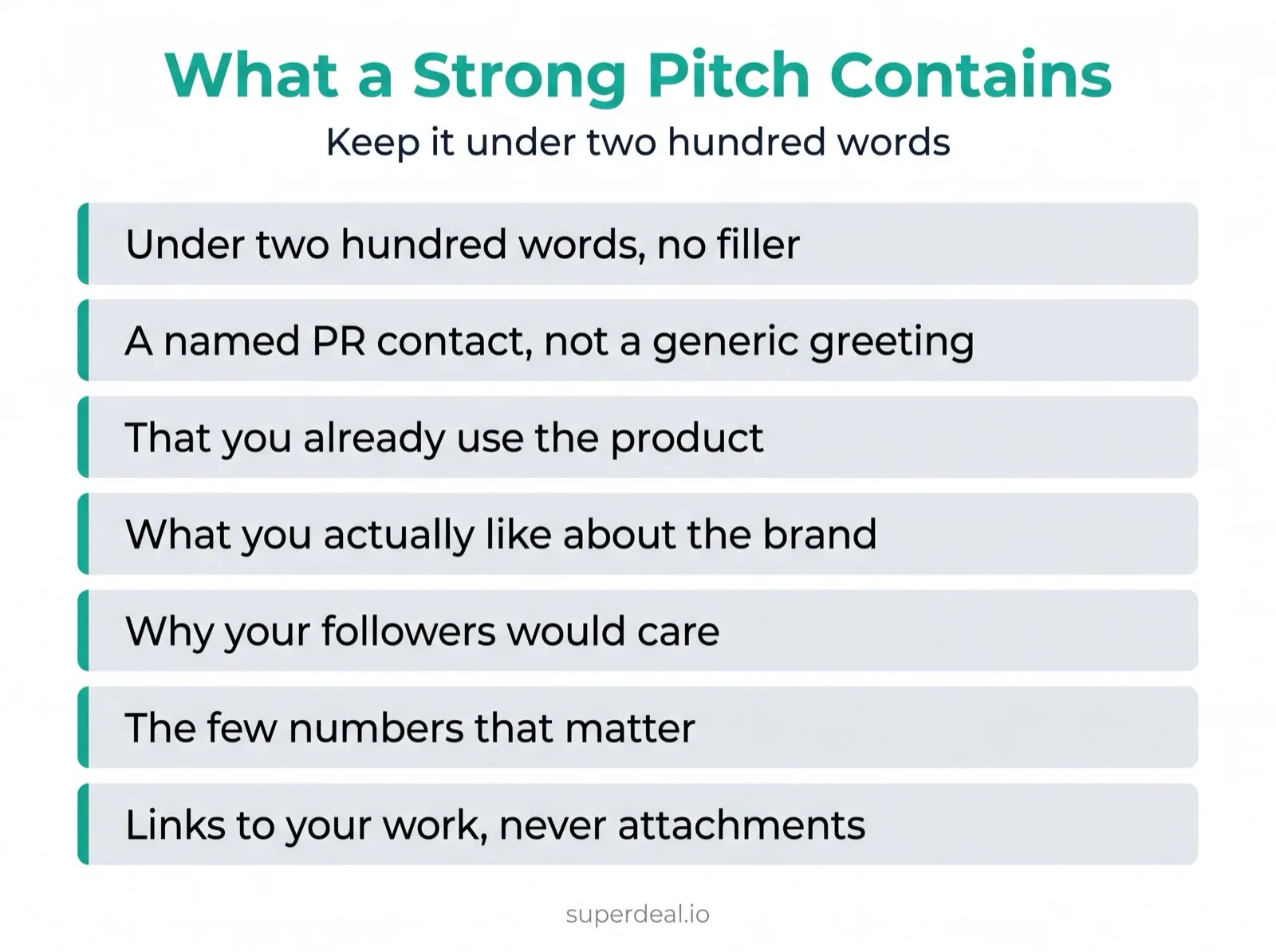
An excellent pitch usually contains the following:
A request under 200 words that contains no filler, negative statements or sales language
A custom instead of generic greeting that addresses a specific PR representative
A statement about how you already use the brand's products and that you regularly share content about them
A statement that outlines briefly what you like most about the brand and their products
A statement that explains how your followers are interested in or use the brand's products
Specific numbers that matter the most to a company, such as the number of years you've used their products, the current number of followers per platform, the percentage of followers who engage and share your content, the total number of views, and the number of followers and visitors who've recently asked for information
Links to a portfolio, social channels or a personal website
Bonus Tip: If your numbers aren't impressive because you have an extremely small follower count, mention only your content's high quality and the mutually beneficial value of a collaborative arrangement.
Before submitting an email or application, always make certain that you're not about to make the following mistakes:
Acting unprofessionally in any way via written text or video
Forgetting to use language that reflects collaboration and mutual benefits
Mentioning non-relevant life details or past failures and negatives
Using large attachments instead of links to your portfolio, accounts or custom website
Bonus Tip: If you've decided to send emails, never spam random brand accounts with generic script messages. Send out between roughly 10 and 20 personalized emails each week.
Most Common PR Package Mistakes
Many influencers make critical mistakes after they receive PR packages. The errors cost them business partnerships, followers and relationships with other influencers. Some damage their reputations too much and even experience legal troubles. What might seem like a small oversight can end your career.
For these reasons, it's important to prevent the most common mistakes. For example, never accept products unrelated to your experience, knowledge and niche. Brands know that target markets are critical for success. When influencers branch out too much into unknown areas, they usually lose followers who have no interest in those topics.
You must always fully disclose that you received a product for free when talking about it on your channels. Social platforms have disclosure rules. The U.S. Federal Trade Commission also has specific Guides Concerning Use of Endorsements and Testimonials in Advertising, which includes word-of-mouth advertising conducted by professional influencers.
Bonus Tip: For more information, read the FTC's Endorsement Guides: What People Are Asking.
In addition, you need to ask specific questions before publishing content about a product. Consider the following scenarios:
Reviewing damaged products. Never risk the loss of a relationship with a brand over a warehouse storage or shipping incident. Many companies will quickly send you a replacement if you simply tell them the product arrived damaged, show photographic proof, and ask if they'd be willing to send a replacement.
Making gift assumptions. Unless a PR package arrives with clear documents about the nature of the gift, it's always wise to ask the sender if the products really are gifts or an attempt to start a paid collaboration. If you're dealing with the latter scenario, the company might have specific content and deadline expectations. Even if it's a gift, you also need to know when you're allowed to talk and post about it before an official launch or release date.
Talking inexpertly. Some influencers joke about how they mispronounce a brand's, product's, or person's name. They refuse to read instructions before an unboxing and then spend a lot of time guessing how a product works. Companies want influencers to advertise for them. As a result, you must present the brand and products in a more positive light. Ask the PR box sender for details about correct pronunciation, product features and instructions.
Using bad tags. Brands have rules about how you disclose that you received a product as a PR box gift. If a product doesn't include instructions about compliance requirements, you should always reach out to the brand and ask for that information, including the hashtags and other words you should use. When you don't have a paid collaborative relationship, most brands prefer you use #gift, #PRBox or #PRgift as a tag.
Taking the Next Step: UGC Deals
After you build a solid relationship with a brand or see an increase in your followers and engagement, you can move on to asking for money in exchange for content creation and promotional efforts targeting your followers and others with similar interests who visit your channels. Before you ask, always investigate the average paid rate for what you've offered based on your niche, follower count, content volume and other factors.
To read more about PR packages and UGC deals, see these guides:
To join our creator community and streamline the process of receiving PR boxes and arranging UGC deals, create a free profile. Our tools help you get discovered and negotiate contract terms, reply to emails automatically, track every step of the process, connect your social accounts, manage your content deliverables, and see when payments are released to you.