How to Monetize Instagram in 2026
Instagram has no creator fund, so the money comes from brands rather than the platform. What each route actually pays, what to set up first, and what a realistic first deal looks like.

Founder & CEO, Superdeal
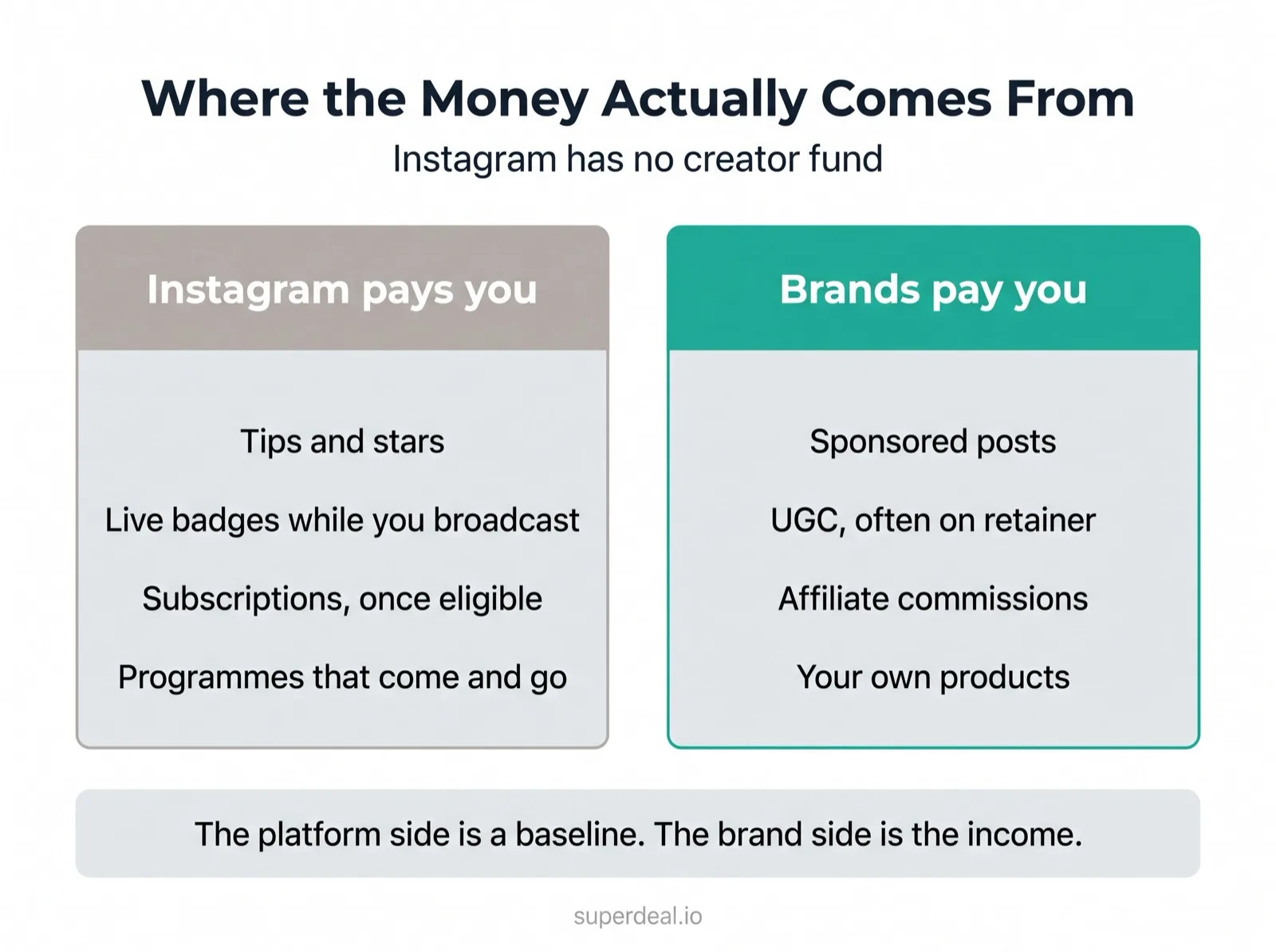
Whether you are starting out on the platform or have been around for years, you may have questions about how to monetize Instagram. Unlike many other social media platforms, Instagram doesn't have a built-in creator fund program like TikTok Creator Rewards or the YouTube Partner Program. While each of those setups presents challenges, they do at least provide a path to monetization. To monetize Instagram, you have to dig deeper into the available income opportunities.
What Instagram Offers for Monetization
There are a few ways that you can monetize within the Instagram ecosystem, but they can be tough. For example, there is a tipping system that pays a fraction of a cent per star. It allows users to tip you, but even large accounts often report modest monthly totals from programs like Stars on Reels. Likewise, you have to turn it on actively in the monetization dashboard.
Live badges during live broadcasts offer a little more revenue, sold at a few fixed price points. Buyers get a highlight in the live comment feed. The downside is that the income only comes in while you're broadcasting live.
Once you pass Instagram's follower threshold, you can turn on subscriptions. However, the program is only available in a limited set of countries, and the threshold doesn't help newcomers and small accounts. Instagram changes these rules regularly, so check the current eligibility requirements before planning around any of them.
Instagram does offer some infrastructure for working with brands. The Creator Marketplace matches users with companies looking for influencers. Likewise, there are tools for publishing branded content and Partnership Ads.
Ways to Monetize Outside of Instagram's Platform
Much of how to monetize Instagram account growth comes down to working with partners off the platform. Many accounts work with outside parties to:
Make sponsored posts
Use products in photos and Reels
Connect with affiliate links
Produce user-generated content (UGC) or similar-style content
Many users also leverage their own branding to create products and sell those on IG. For example, you might sell T-shirts and hats with your channel's logo. If you're a maker, this can go further into promoting your own tools and even end products. Lifestyle brands, such as cooking Instagrams, sometimes sell their own branded products like utensils and cookware. Authors frequently rely on Instagram specifically as a promotional channel for their books.
The User and Financial Outlook on Instagram in 2026
The creator economy is now a genuinely large market. Mordor Intelligence values influencer marketing at $40.51 billion for 2026, and Instagram is the platform more US marketers use for influencer marketing than any other. That is why brand money remains the main route to income here rather than anything Instagram pays you directly.
Instagram's own features unlock in stages as an account grows: gifts first, then the Creator Marketplace, then subscriptions and live badges. The exact thresholds move, so treat them as a ladder rather than a set of fixed numbers.
Brand interest follows its own curve. Accounts tend to start appearing in brand searches well before they would be called large, and the point at which an account stops being treated as "small" for partnership purposes is higher than most creators expect.
Know Your Metrics
A small or even nano account with an active and engaged following can be more valuable than a huge account that's an activity graveyard. A nano account with a strong engagement rate likely beats someone with 30,000 followers who might as well not exist, especially for content like UGC. Use the dashboard to follow how well your followers are engaging, and be prepared to present this information upon request to prospective brands.
How to Monetize Instagram
Monetization methods break up into a handful of distinct groups. Depending on whether you leverage IG's platform or a third party, the effectiveness will vary. More followers will always be better, but you may be surprised how well certain approaches work for even nano accounts.
Sponsored Posts
A sponsored post is your normal content that frames whatever the brand wants. You might exhibit the product, show how you used it, and mention desirable results. Generally, sponsors want you to use your exact setup for a sponsored post. Use your usual phone in your normal lighting because the point is that the brand melts into your account's larger vibe. The agreement usually requires the post to stay up for a specified period, normally 30 to 90 days.
Most posts also include some captioning. If there's a user code for a website or app, for example, it's good to make it available in the caption. Likewise, the #ad tag provides proper disclosure of a paid partnership.
Returns for sponsored posts vary enormously, from a couple of dozen dollars for a story slide on a nano account to four and five figures for a static post from a mid-range account. It is a good idea to track benchmark rates by follower tier to get a better sense of what your opportunities might be. This also makes it easier to target how many followers to monetize Instagram on your account.
UGC
User-generated content tends to offer the best opportunities for small accounts. For example, many local brands are hunting for UGC right on Instagram. The distinction between UGC and sponsored posts or Reels is that UGC materials usually follow a strict script from the brand. The pull of UGC is on the consumer side: in Stackla’s survey of shopper behaviour, 79% of people said user-generated content highly influenced their purchasing decisions, against 13% for content made by the brand itself and 8% for influencer-created content. Notably, many brands offer retainers to creators, usually with a requirement for a handful of fresh Reels or posts every month. It is a good idea to learn what UGC work actually involves before diving in, because the demands tend to be more serious.
Affiliate
Instagram recently reinstated its own affiliate program on the platform. Likewise, many nano creators start with affiliate links to Amazon products, since the program accepts anyone. Be aware that many affiliate programs are not available in all countries, so know the rules for where you live. U.S.-based affiliates tend to have the most options. Commission rates are usually in the low single digits, reaching into double figures only on some higher-margin categories.
A big opportunity is working directly with brands through their affiliate programs. Many either have in-house programs with links or they work with a company that helps you set up a free creator profile to work with the brand.
How to Monetize Instagram Reels
The most basic way to monetize Reels is to reach the follower threshold for gifts and activate the Stars on Reels program. This won't bring in huge money, but it does give you a baseline, so do it the instant it becomes available to you. Entertainment, comedy, and lifestyle brands often do best with this approach.
At a higher follower count, Subscriptions become available. However, turning it on isn't a great idea for a lot of accounts. If you know your popularity would make you sorely missed, then Subscriptions might be worthwhile. For a lot of accounts, staying live in feeds for non-subscribers is more valuable. Live badges are another opportunity, but you need to have a steady stream of regular viewers who engage.
Brands often use the Creator Marketplace to engage with Reels. You need to be over 18 years of age and live in an eligible country, though. Familiarize yourself with Instagram's official eligibility requirements.
Preparing Your Account for Monetization
If you don't already have an IG account, then the first order of business is setting up one. You also want to move your account to a professional account. Otherwise, you do not get the analytics, the monetization tab, or access to the Creator Marketplace.
In particular, you want the analytics. This is where you can find the key details that brands want to know, such as:
Reach, particularly follower versus non-follower numbers
Engagement, especially raw like counts
Audience demographics
Follower growth
Profile visits
Saves and shares
Replays
Average watch times
External link usage
Your initial goal should be to develop content and shape your own identity on the platform. This will drive followers and engagement, also providing metrics in the analytics dashboard.
Build Your Media Kit
Operate your account like you mean business. That starts when you build a media kit brands can act on. Your media kit should include:
Your bio
The account's niche
A list of all platforms you're currently on
Up-to-date follower counts
Your engagement rates
Examples of previous collaborations
Your contact information
Your goal is to make the process as frictionless as possible for brands. Have the numbers ready, and update them at least once a month. One out-of-date number is enough to make a brand doubt your entire package.
Brands also want influencers to have a clear idea of what their charged rates are for different types of content. Again, reference the benchmark rates by follower tier to get a ballpark idea of what your rates ought to be. More than anything, brands want a number so they can quickly make a decision.
Defining Your Niche
It is wise to define your niche so you can include it in your media kit. The niche should be a punchy one-liner that lays it all out. If you're a vegan cook whose demographic skews toward parents, your niche might be "plant-based meal ideas for parents with picky kids."
Avoid trying to be all things to all people. The best thing you can do is to drill down into a defined niche and own it. Brands want to know what audience they're getting for their dollar when they engage with you and, by extension, your followers.
What Isn't Worth the Bother
A major problem on Instagram is that a lot of outdated ideas still circulate regarding what you should do to build an account, grow followers, and engage with brands. Some of these are downright counterproductive.
Engagement pods used to be a thing on IG, but the platform long ago started tracking the audience well enough that it knows the difference between a deliberate pod and real engagement. Also, do not buy followers under any circumstances. This actually drives down your engagement metrics. Likewise, you want to attract brands and make money, not spend money boosting numbers. Many brands conduct an audit of your followers using automated systems, and they will flag you for buying a follower count. Instagram conducts sweeps to cancel fake follower accounts, too, and this can crater a large number quickly if you bought most of your followers.
What a First Deal Often Looks Like
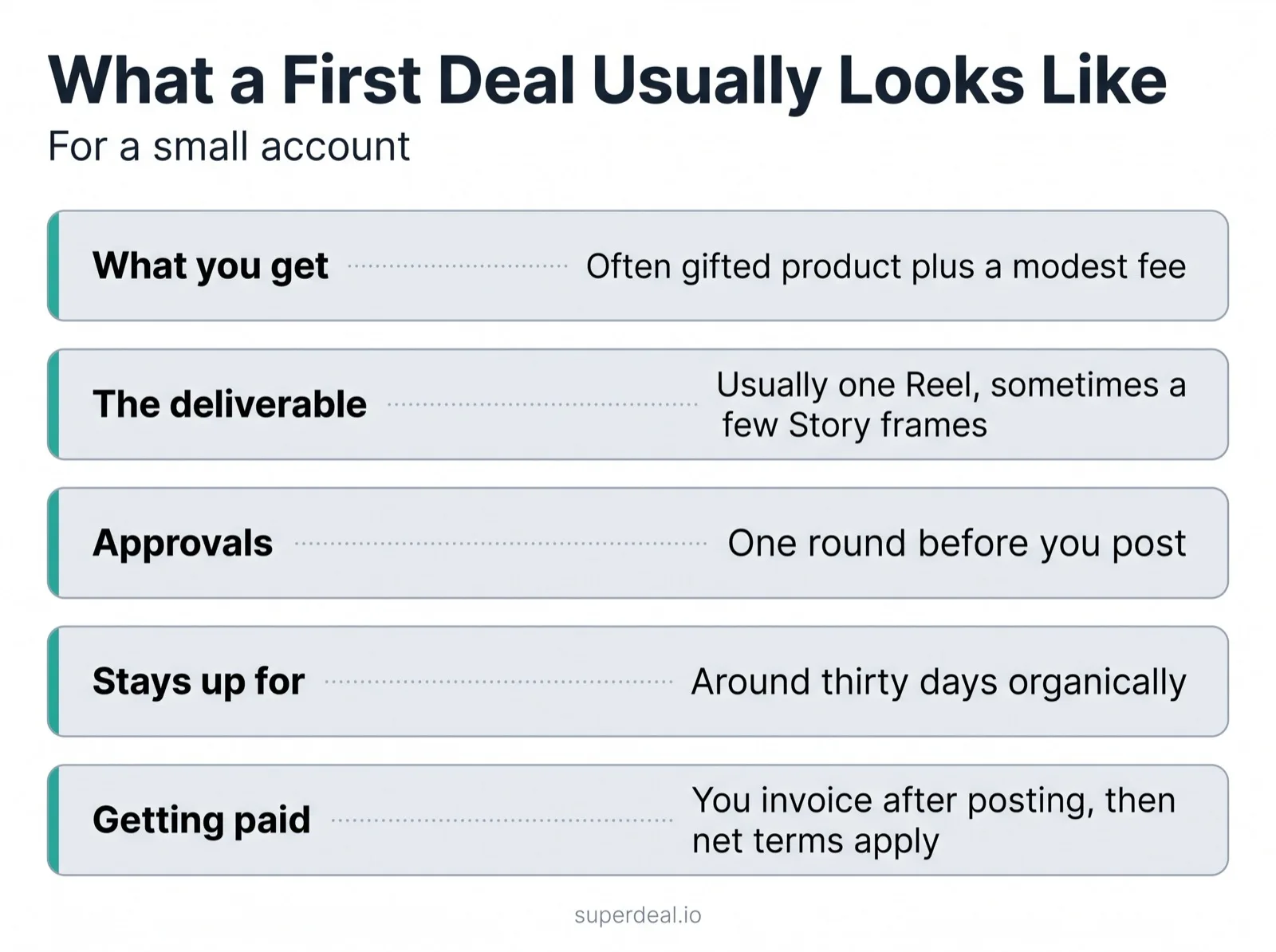
Most brands nibble a bit to begin with, so the first deal for a nano account is often small, sometimes only a gifted product plus a modest fee. There is usually one approval before posting, and most deals involve something like one Reel. A slightly bigger first deal might include a couple of Story frames. The normal first deal starts with 30 days of the content being up organically.
Keep proof of your work, specifically the Reel and the related posting content. It likely has to meet the brand's standards. Also, be aware that many brands don't pay until you invoice, so have your invoice ready to go once the content is up. Likewise, know what the company's net-X is for payment. For example, a net 30 schedule means they pay 30 days after invoice, not 30 days after the post goes up. Invoice quickly after posting, because this is a business. As deals start arriving, it helps to have a system for how creators manage brand deals rather than tracking them in your head.
Start Monetizing Your Instagram Account
Build your account with a professional attitude on the branding and monetization side. Even if your account is the goofiest stuff out there, brands want to know what they're dealing with when they pay. Have your media kit ready to go with rates and actionable metrics. Know which types of brands are the best fit for your niche so you can start pitching them instead of waiting for them to find you.
Once you get one deal, work on the next. Most creators have at least three or four brand relationships that anchor their monetization plan. With a concentrated effort, you can make your Instagram account highly appealing to brands no matter its size. A free creator profile gives brands somewhere to find your numbers and rates without you having to send them anywhere.PGIeAhtCRa4yhhJ3UzhTs1c0ddWg4SRuuMIT5AXq1d9d9535